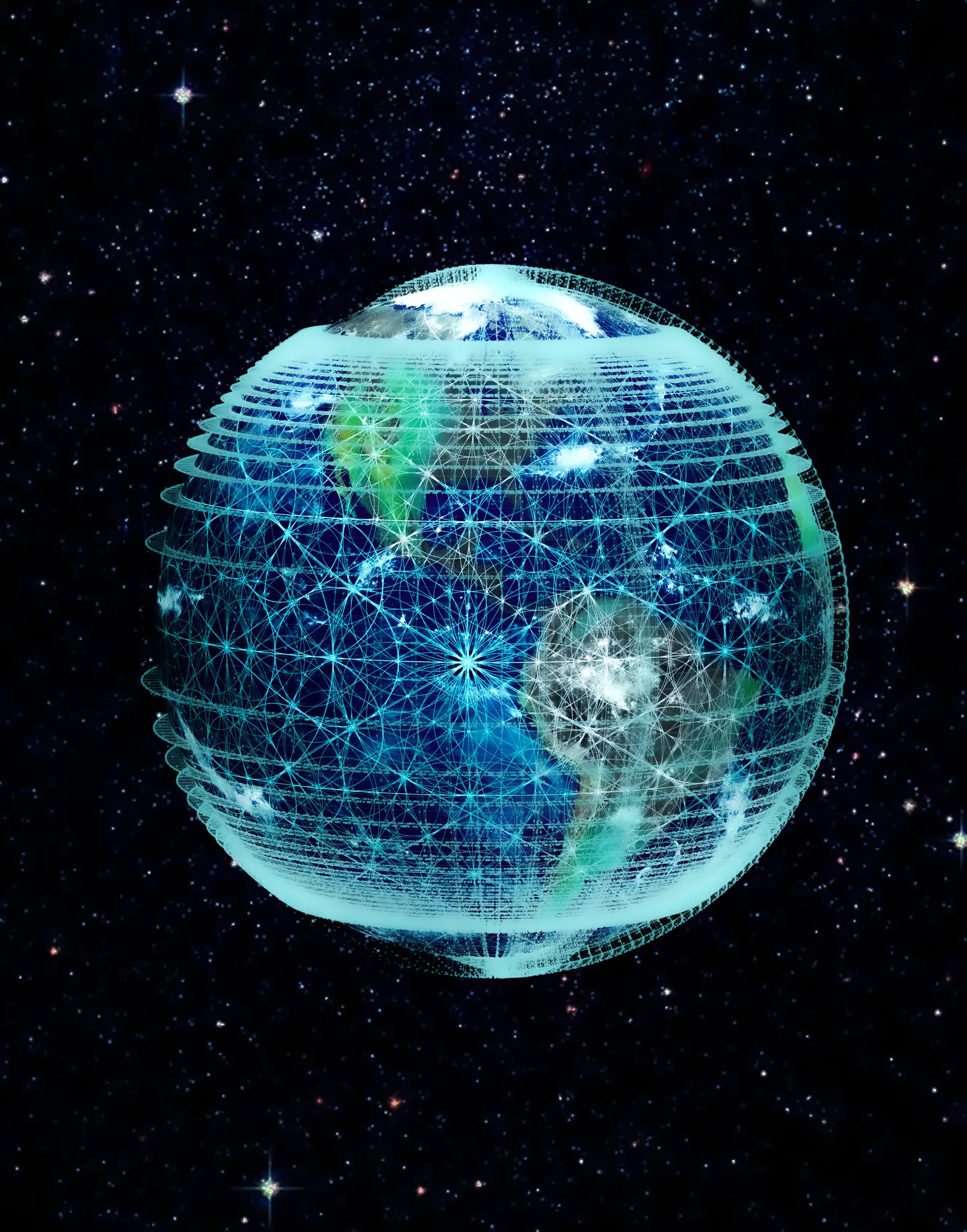
Terrestrial Architecture
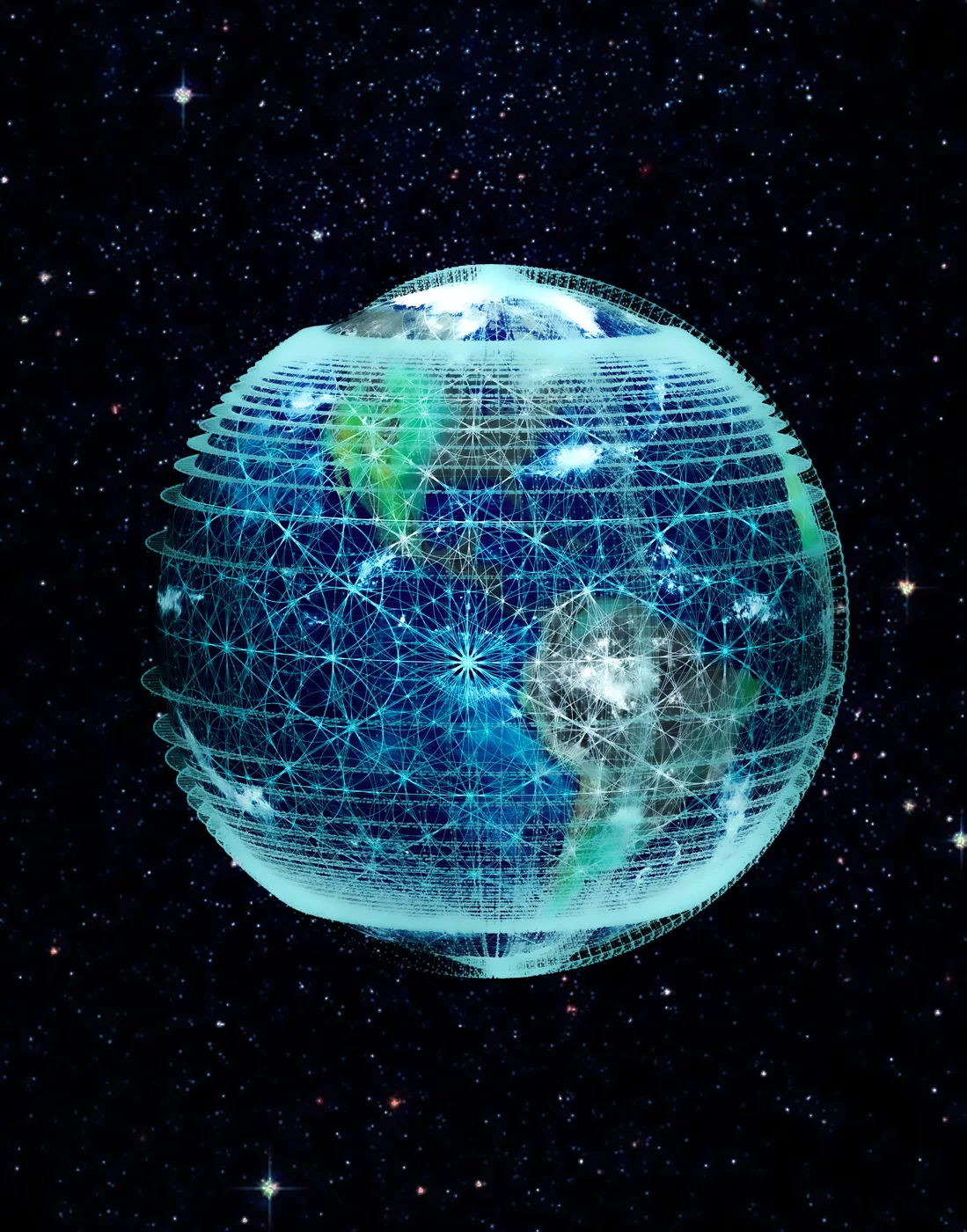
How do architecture, landscape and infrastructure co-function with the systems of the Earth? Volume I builds an answer in three parts: what the natural systems are, how computation lets us perceive them, and what geometry can do with that knowledge.
- Author
- Jack Oliva-Rendler
- Publisher
- e7 Architecture Studio Press
- Published
- 2024
- Extent
- 204 pages, 8 × 10 in
- ISBN, hardback
- 979-8-9899403-0-1
- ISBN, paperback
- 979-8-9899403-1-8
- ISBN, ebook
- 979-8-9899403-2-5
- Design / editing
- Rick Schank, Purple Couch Creative / Jill L. Ferguson
The book begins from the author’s education between two architect parents, SCI-Arc and the Harvard Graduate School of Design, and from a single project that organised his questions: Glen Howard Small’s Biomorphic Biosphere. It asks why the design professions work parcel by parcel when the biosphere does not, and gathers the science, philosophy, tools and geometry needed to work otherwise.I, p. 9–11
I.1Part 1 · Comprehension of the natural systems
| Ch. | Title | Argument |
|---|---|---|
| 01 | Reflections of Ecology, Design, and the Sacred Interconnectivity of All | Architecture is responsible to human and non-human life alike; megacities are tied to distant ecologies by extraction and supply. |
| 02 | GAIA and the Biosphere | Vernadsky’s biosphere and Lovelock’s Gaia: the Earth as an energy-converting, self-regulating system. Forest light as a model for layered space. |
| 03 | Geochemistry | Elements move in cycles; the form of living bodies matters more than the matter passing through. “Perhaps nature is a technology.” |
| 04 | Philosophy, Biology and Morphology of Nature | Against machine-like views of nature. Morphology as a possibility space, with Harman, Latour, Sheldrake and Lynn. |
| 05 | Fractals in Architecture | The city as a continuous fractal lattice; megastructures generated from a single formula. |
I.2Part 2 · Computation relative to terrestrial architecture
| Ch. | Title | Argument |
|---|---|---|
| 06 | Cybernetics | Wiener’s feedback, prediction and memory; the nervous system as a model for sensing infrastructure. |
| 07 | Cyberinfrastructure and NASA’s Earth Observing System | Remote sensing, elevation models, lidar, and the institutions and standards that hold Earth data. |
| 08 | Platform Architectures and Virtual Community Action Planning | An open city object model and a process for using it with communities, ending in a digital twin. |
| 09 | Global Terrestrial Reality Case Studies | Extraction, distribution and consumption at planetary scale; the Colorado River Basin. |
| 10 | A.T.L.A.S. | A building that is both an Earth-analysis platform and an energy infrastructure, on the Los Angeles River. |
| 11 | Instrument of Terrestrial Transformation | The building as a device for modelling and foretelling the Earth’s future. |
| 12 | Deep Storage and Operative Architecture | The robotic library; memory as a tool for interpolation. |
I.3Part 3 · Morphology
| Ch. | Title | Argument |
|---|---|---|
| 13 | Geometric Grids, Systems and Organic Morphologies and Crystallography | Tetrahedral, orthogonal and radial grids; harmonic grids; crystal systems; the sketchbooks. |
| 14 | Morphogenesis, Epigenesis, and the Continual Meta Morphologies of Architectural Genealogies | Cities as rule-based acts of resource allocation; toward a collective terrestrial architecture. |
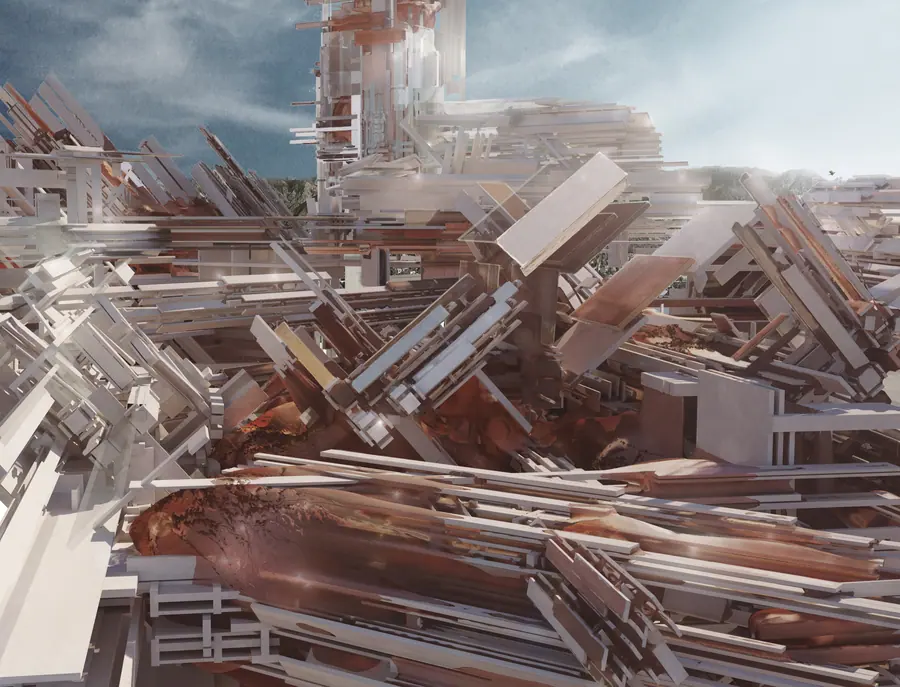
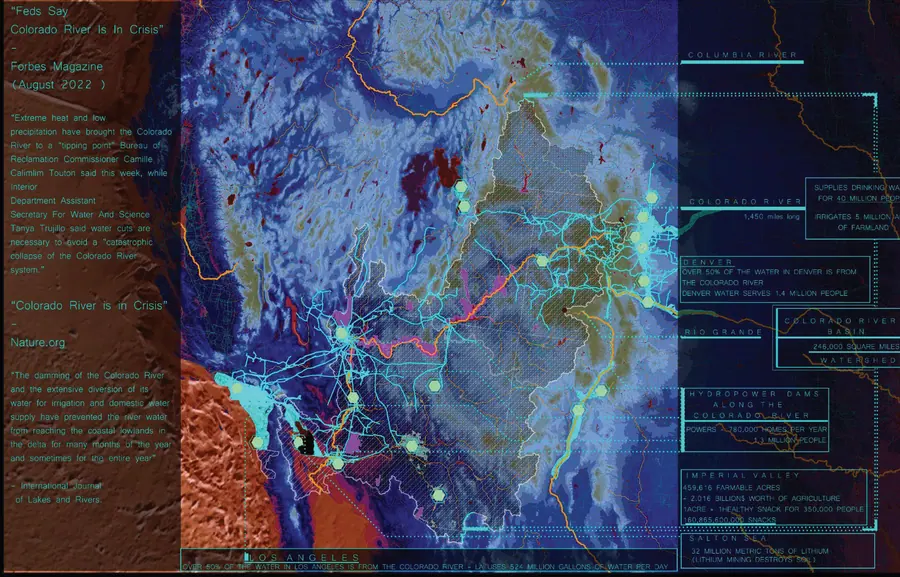
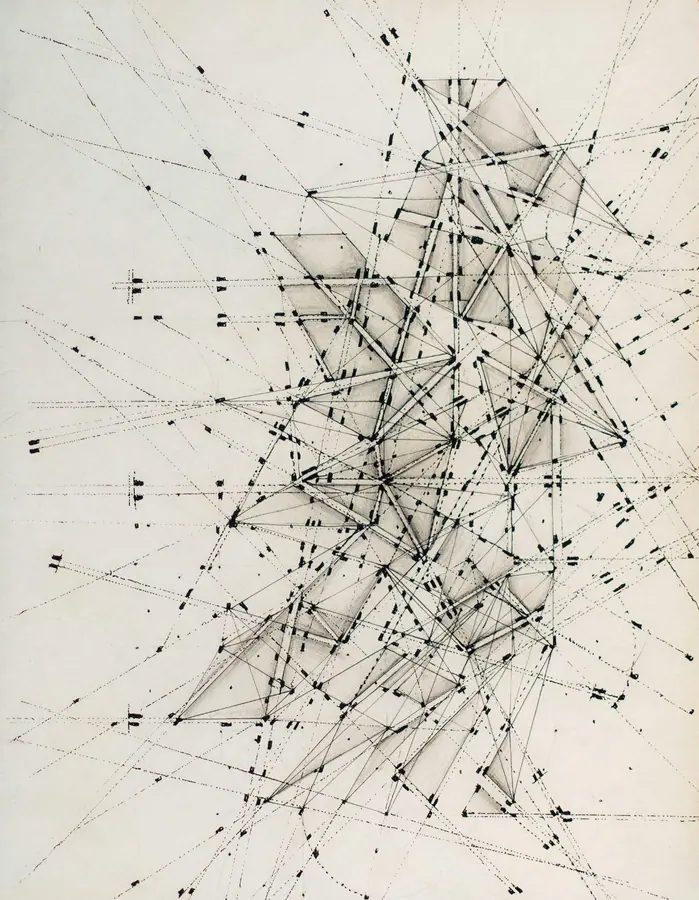
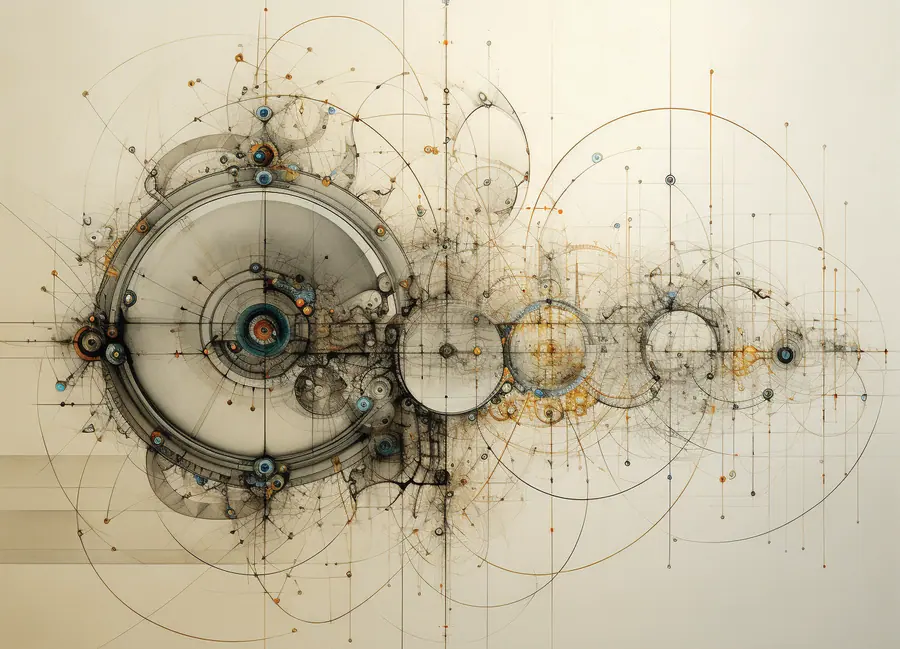
We are destined for harmonic synergetic integration in the unified functioning of earth systems.
Terrestrial Architecture, Vol. I, p. 47
“The book presents a new paradigm where infrastructure, formal geometries as dynamic formulations of space, data, and ecosystems are intertwined to design the planet in a harmonic way.”
Benjamin PollakArchitectural Designer
“Terrestrial Architecture is a brilliant journey through speculative infrastructures that harmonize ecological and human systems in visually striking and always unexpected ways.”
Dr. Stuart CowanCo-author, Ecological Design; Executive Director, Buckminster Fuller Institute
“After reading this book, you will feel more connected to the earth, and to the human projects that both enhance and endanger it.”
Graham HarmanDistinguished Professor of Philosophy, SCI-Arc
“Rendler elegantly illustrates how: As Above, So Below.”
Martin E. WainsteinFounder, Open Earth Foundation
The Codex
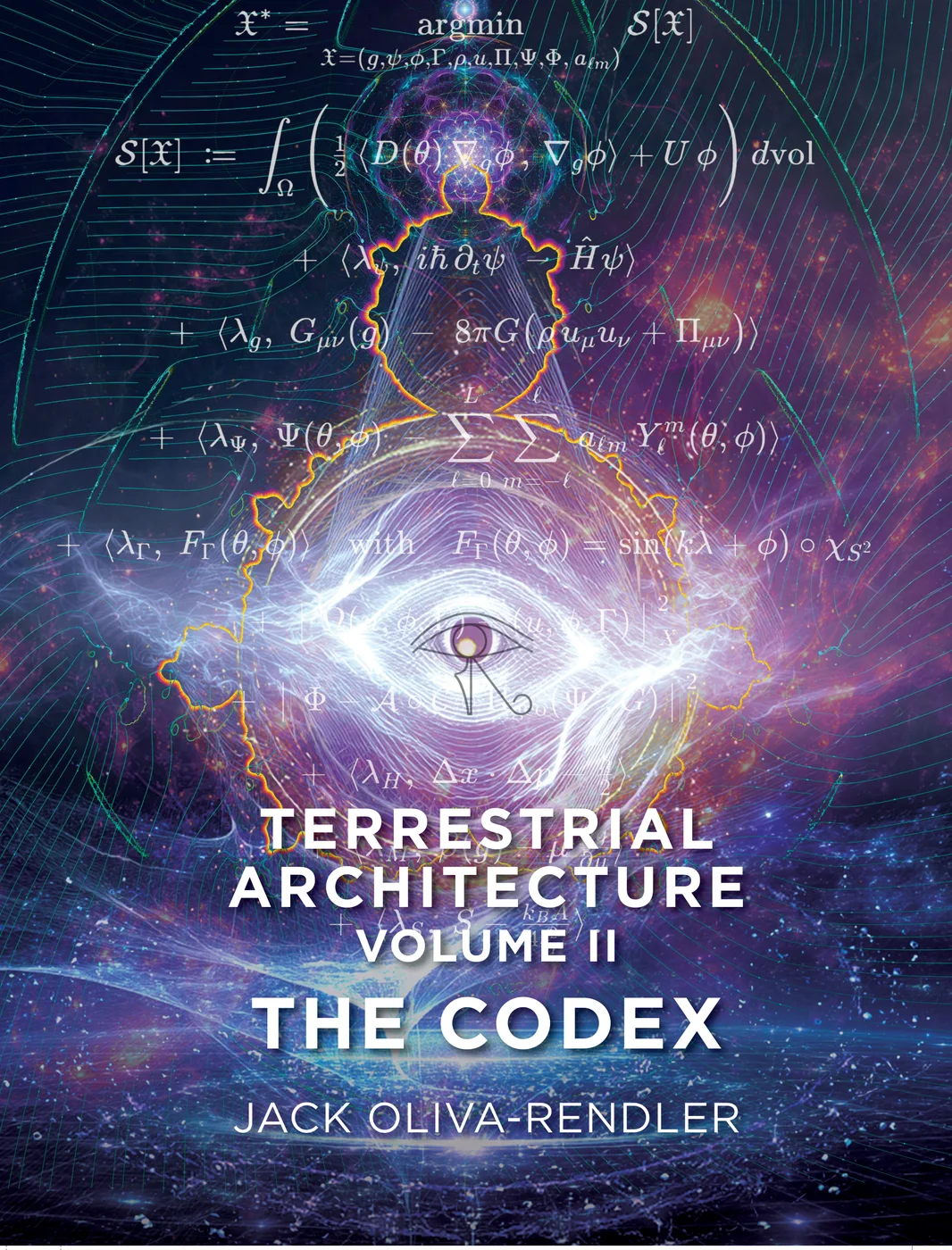
“What if architecture could heal the Earth, not just shape it? What if the blueprints for our cities, buildings, and landscapes were encoded in the very mathematics of the cosmos?”
- Author
- Jack Oliva-Rendler
- Publisher
- e7 Architecture Studio Press
- Published
- 2026
- Extent
- 212 pages, 8 × 10 in
- ISBN, hardback
- 979-8-9899403-3-2
- ISBN, paperback
- 979-8-9899403-4-9
- ISBN, ebook
- 979-8-9899403-5-6
- Foreword / preface
- Samuel Lee, MD / Marcela Oliva
From the atomic void to planetary tensor grids, from fractal megastructures to the healing intelligence of autonomous swarms, The Codex weaves together quantum physics, sacred geometry, and environmental design.
It is a sacred text disguised as a design manual—a blueprint for a world where cities breathe, buildings remember, and every act of creation is an act of planetary care.
The Codex is a different kind of book from Volume I. It is written as a sequence of proofs, figure-essays, invocations and responses, and it is openly spiritual as well as mathematical. Its preface, by the architect and educator Marcela Oliva, gives the plainest account of its aim: “Volume Two exists because once you accept that cities are living systems, you can no longer design them as isolated objects.”II, p. 11
Its central formal idea is convergence. A chain of operators, each a contraction, settles toward a single stable state; the book takes this from Banach’s fixed-point theorem and applies it, by analogy, to fields, to consciousness, and to architecture. For design the working claims are that form is organised energy, that emptiness is generative, and that building well means tuning to patterns already present in a place.
II.1Contents
| Ch. | Subject | Kind |
|---|---|---|
| — | Foreword (Samuel Lee, MD); Preface (Marcela Oliva); Prologue | Framing |
| 01–03 | The Pacific Siege Equilibrium; the Vector Field Armada; A Hieroglyphic Codex on the Siege of Light | Proof and myth |
| 04–07 | Tensor matrices and consciousness; harmonic synthesis and morphogenesis; Source to reality; tensorial emptiness | Mathematics and philosophy |
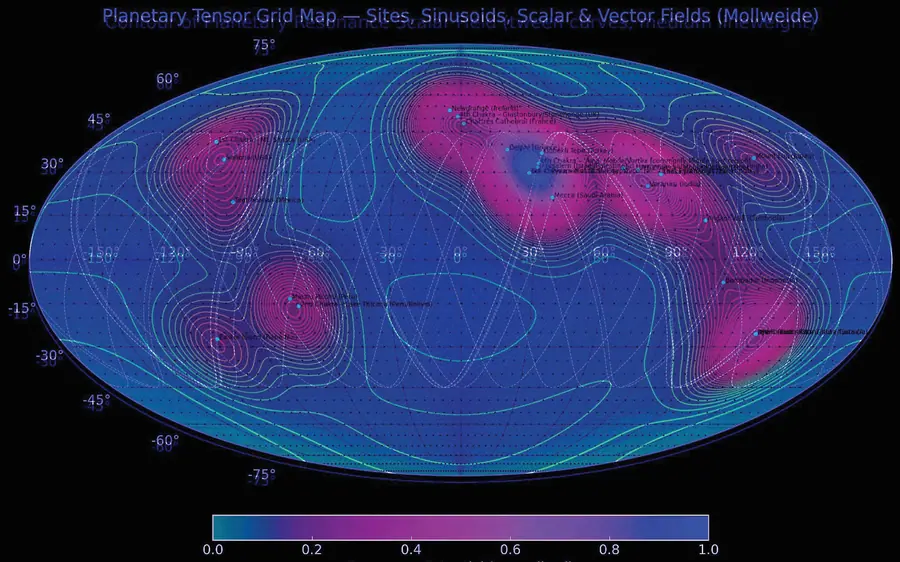
| 08 | The Planetary Tensor Grid and Harmonic Resonance | Planetary model |
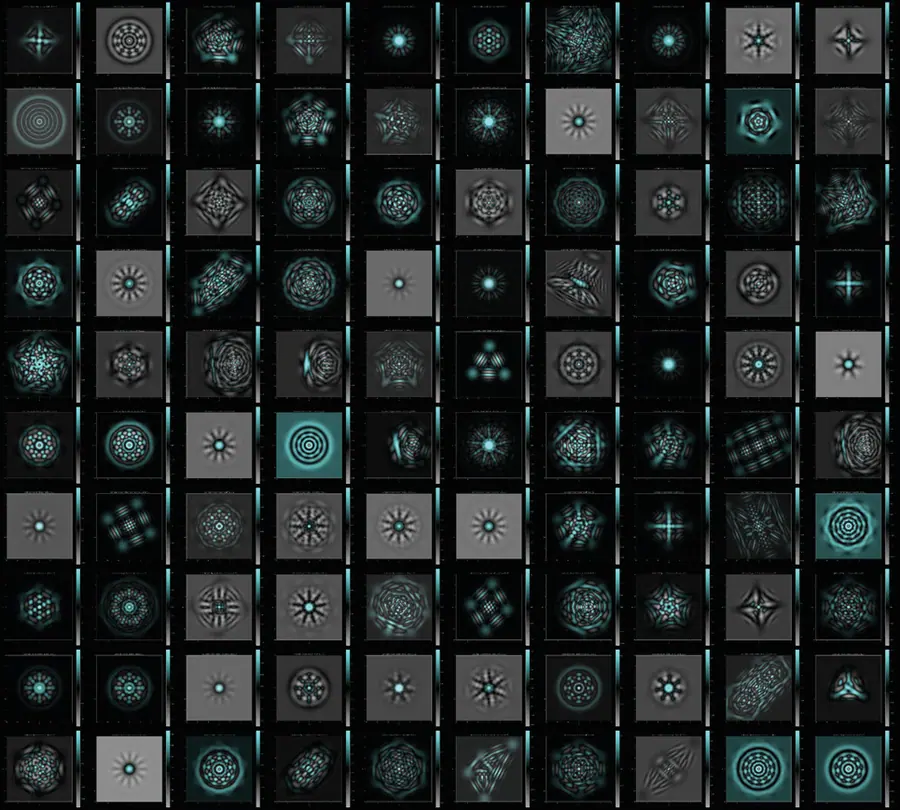
| 09–12 | Mathematical frameworks; Schrödinger and atomic orbitals; a quantum-relativistic atlas; swarm-wave-projection simulation | Mathematics and method |
| 13–14 | Crystalline Megastructures and Architectural Ascension; The Architecture of Ascension | Architecture |
| 15–16 | Geometrical Codex Thesis; Meta-Thesis | Synthesis |
| 17 | AURA and the Integration of Environmental Architectures | Applied platform |
| 18–22 | Foundations and origins; history as a field; The Unbroken Light; responses after Teilhard de Chardin and Sloterdijk | Philosophy and theology |
| 23 | The Codex Swarm: Autonomous Intelligence for the Healing of Earth | Applied proposal |
| 24–25 | Convergence theorem of harmonic operators; spectral stability and harmonic convergence | Mathematics |
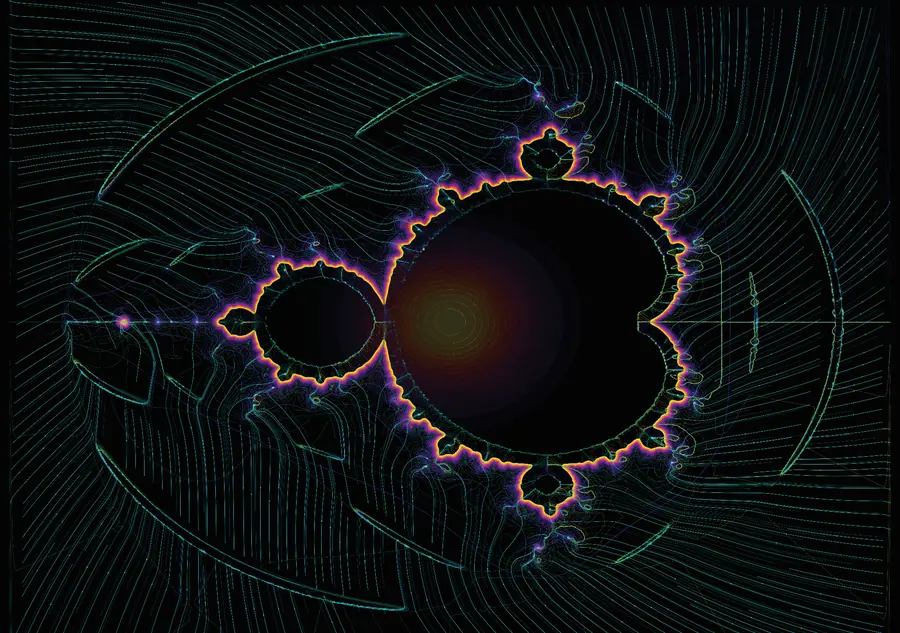
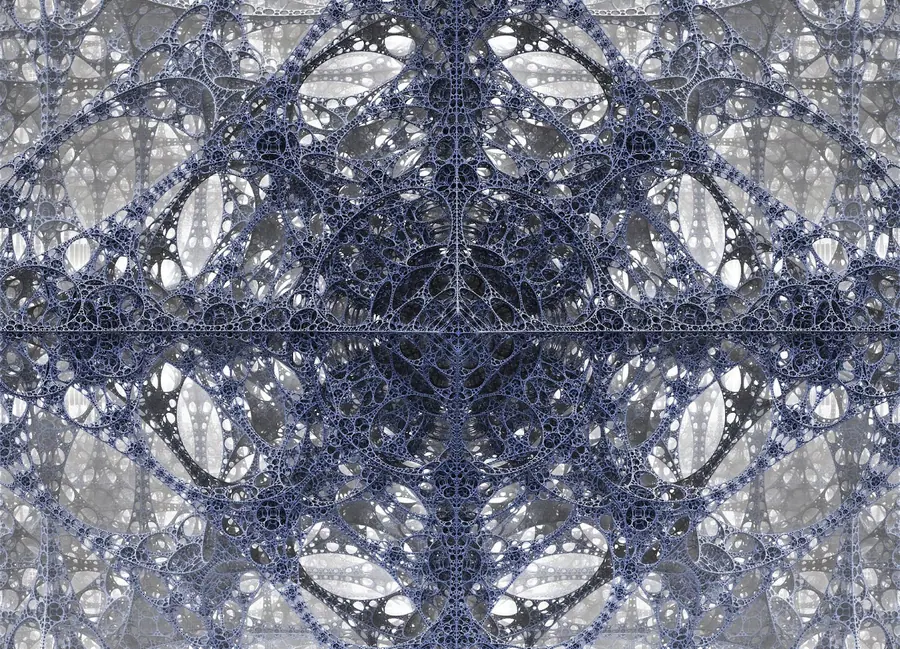
The crystalline megastructures he envisions are not monuments to human ambition but tuning forks for planetary healing.
Samuel Lee, MD, Foreword to Vol. II: The Codex, p. 8
| Term | Meaning in the book | Page |
|---|---|---|
| Contraction operator | A mapping that draws a field toward a stable state; architecture is described as one. | 137–139 |
| Tensorial emptiness | The void as generative: “the loom on which reality is woven.” | 71 |
| Planetary Tensor Grid | The Earth modelled as a spherical standing wave with nodal sites. | 77–80 |
| Quantum Atlas | A library of standing-wave planforms read as plans and routes. | 116–122 |
| AURA | A geospatial and extended-reality platform applying the Codex to live data. | 161 |
| Codex Swarm | Autonomous agents for ecological restoration, coordinated by tuning. | 196 |
The future city is not a smart city. It is a caring city, one that grows like a tree, learns like a river, and adapts like a forest.
Marcela Oliva, Preface to Vol. II: The Codex, p. 14
From description to tuning.
Volume I is the survey and the toolkit: what the Earth’s systems are, how they are sensed and modelled, and which geometries can organise building at their scale. Volume II is the speculation: a mathematical and spiritual account of why form matters, with two applied chapters, AURA and the Codex Swarm, that return it to practice.
ATLAS TERRAFORMA works between them. The territorial research on this site comes mainly from Volume I; the instruments from the theses it documents; the morphology from both.