ATLAS TERRAFORMA

04 · Morphology

Rules that become form.

Why shape is environmental performance, and how recursive geometry, harmonic grids and crystallography generate architecture from district to detail.

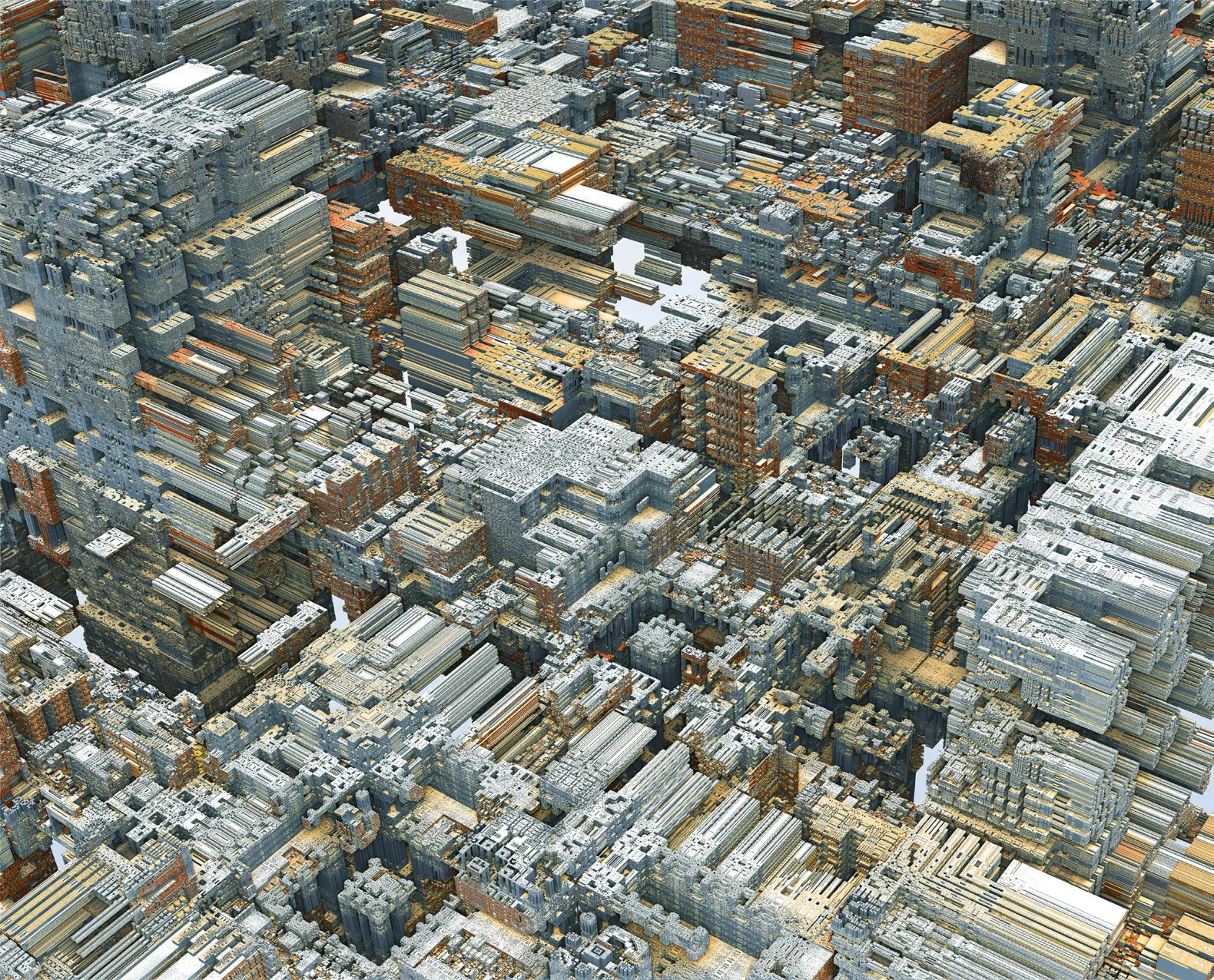
Fractal megastructure study
Mandelbulb 3D · Speculative
Terrestrial Architecture, Vol. I, p. 68

01 / Principle

Form governs energy.

The practice takes its idea of form from the biosphere. In a forest, structure is how light is shared: canopy, understory and floor are a section through available energy.

Volume I states it as a principle: "The fundamental manipulation of energy in nature happens through morphological phenomena which I consider architecture."I, p. 50 It names the rules that produce such forms algorithmic morphologies, "the language that Earth speaks in its physiognomy in chemistry and biology as architectures."I, p. 49–50 Following Vernadsky, the form of a living body matters more than the substances that pass through it.I, p. 39–42

For a building or a city this means shape is not styling. It is the way the thing handles sun, air, water and movement, and it can be generated from rules in the way a tree or a crystal is.
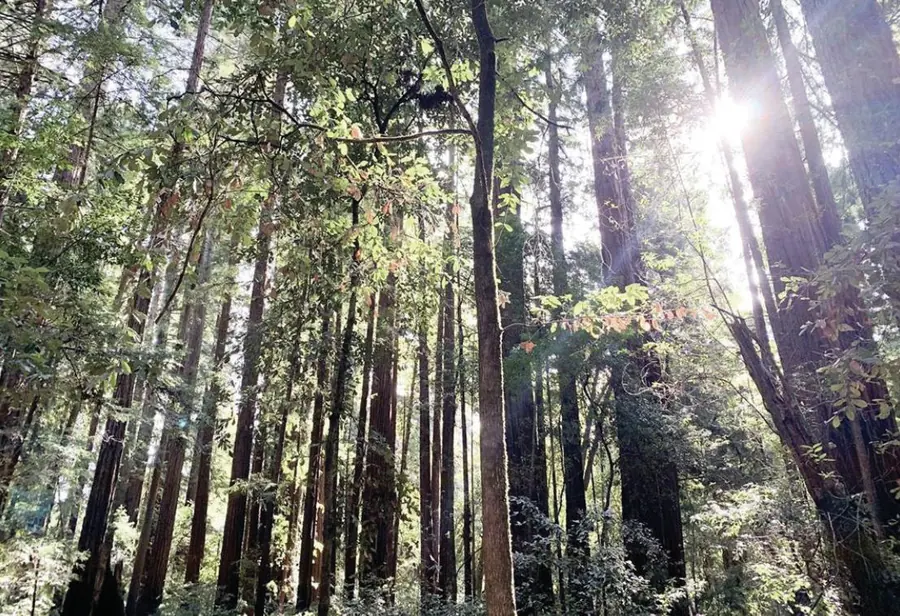
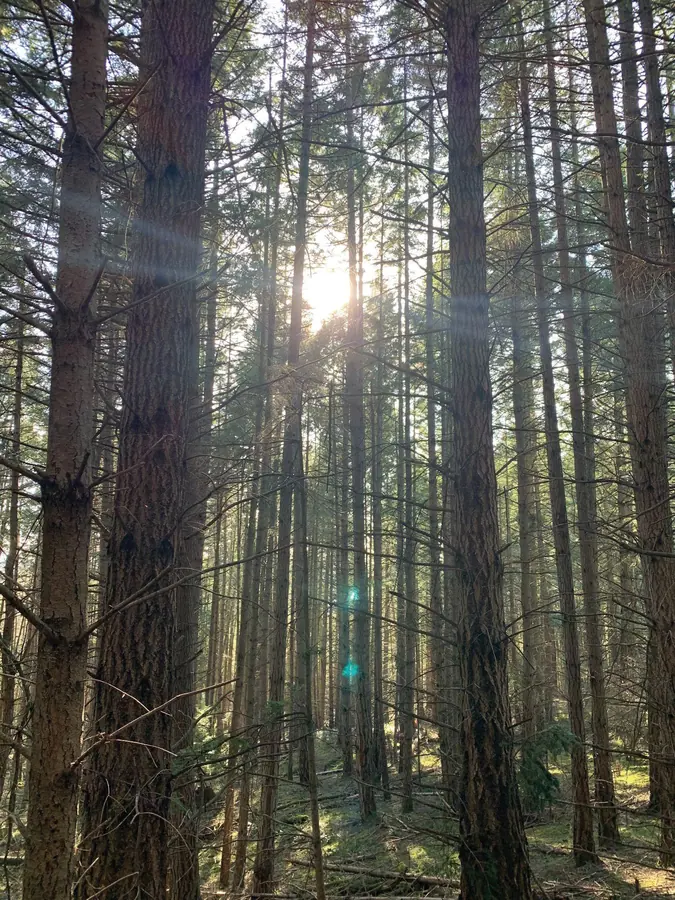
Redwood forest, Santa Cruz, California
FIG. 01Redwood forest, Santa Cruz, CaliforniaPhotograph by the author.Terrestrial Architecture, Vol. I, p. 31
Forest on Orcas Island, Washington
FIG. 02Forest on Orcas Island, WashingtonPhotograph by the author.Terrestrial Architecture, Vol. I, p. 62
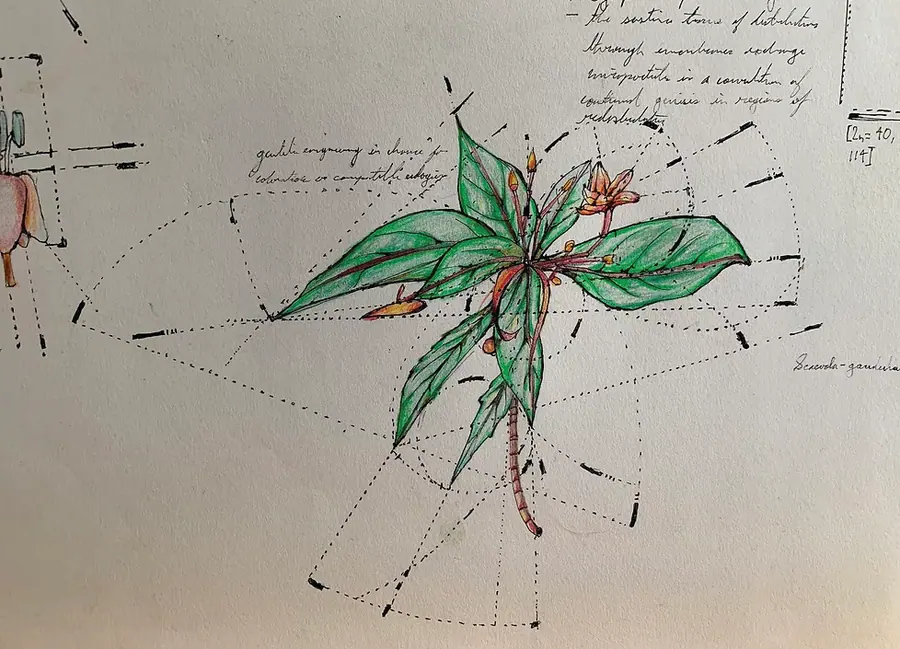
Field drawing
FIG. 03Field drawingDrawing by Jack Oliva-Rendler.Terrestrial Architecture, Vol. I, p. 29

There is an architecture to organisms and an architecture to environments and a feedback loop between the two.

Terrestrial Architecture, Vol. I, p. 42
02 / Megastructure

The fractal city.

Chapter 5 of Volume I argues that modern building is organised around the single client and the single lot, and that a different model is needed for needs that are collective and ecological. It reads the existing city as already fractal: "continuously subdivided cellular systems… each building is an individual expression of the overall formula of the city."I, p. 63

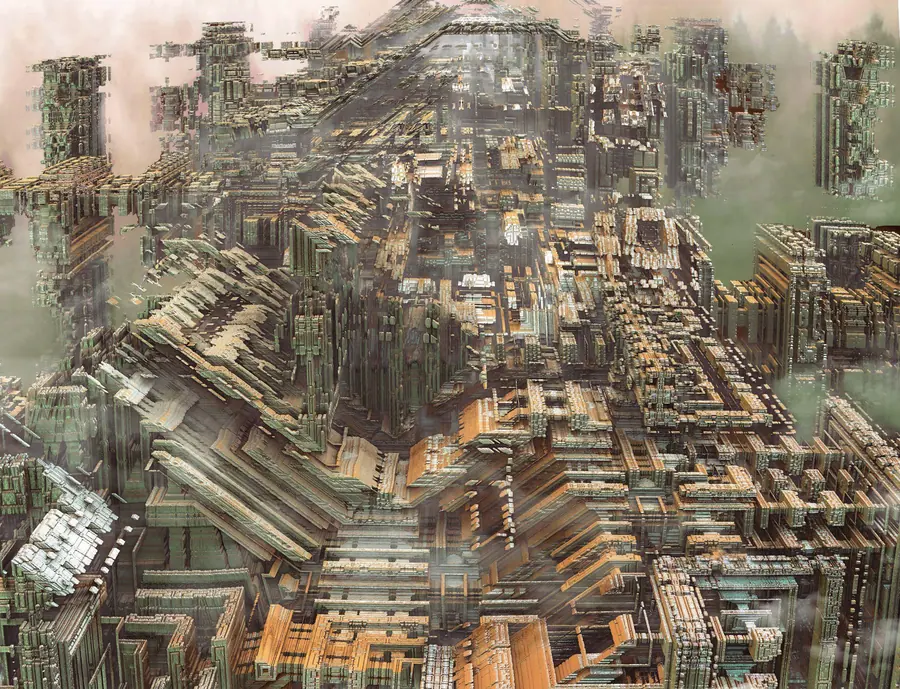
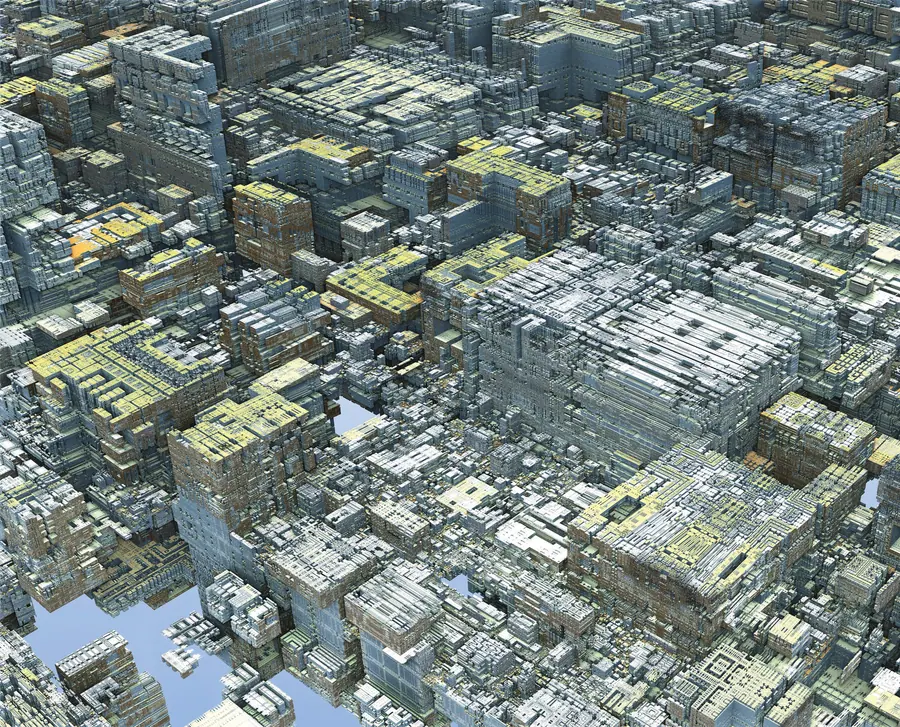
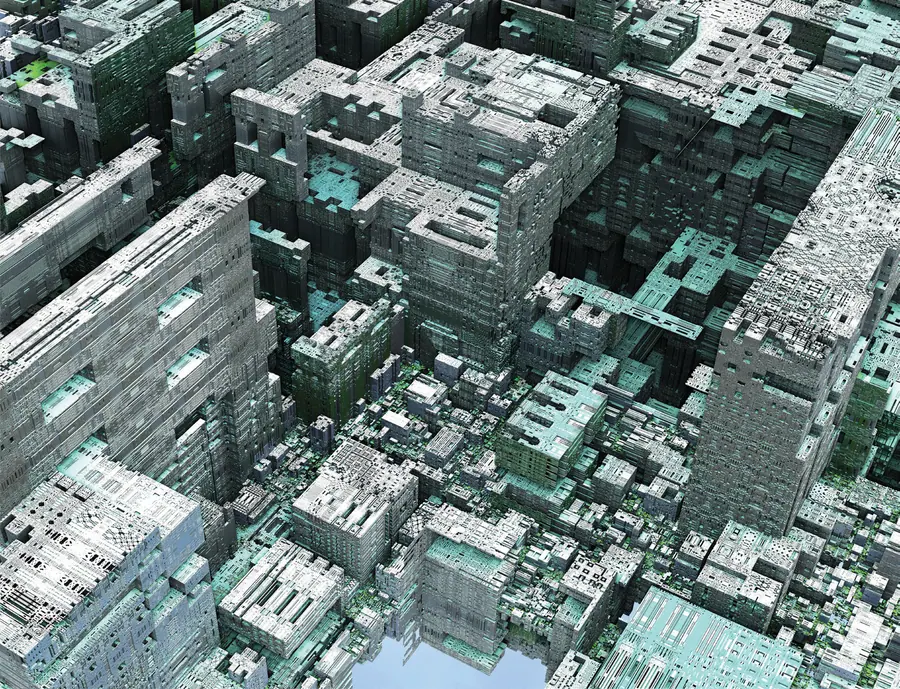
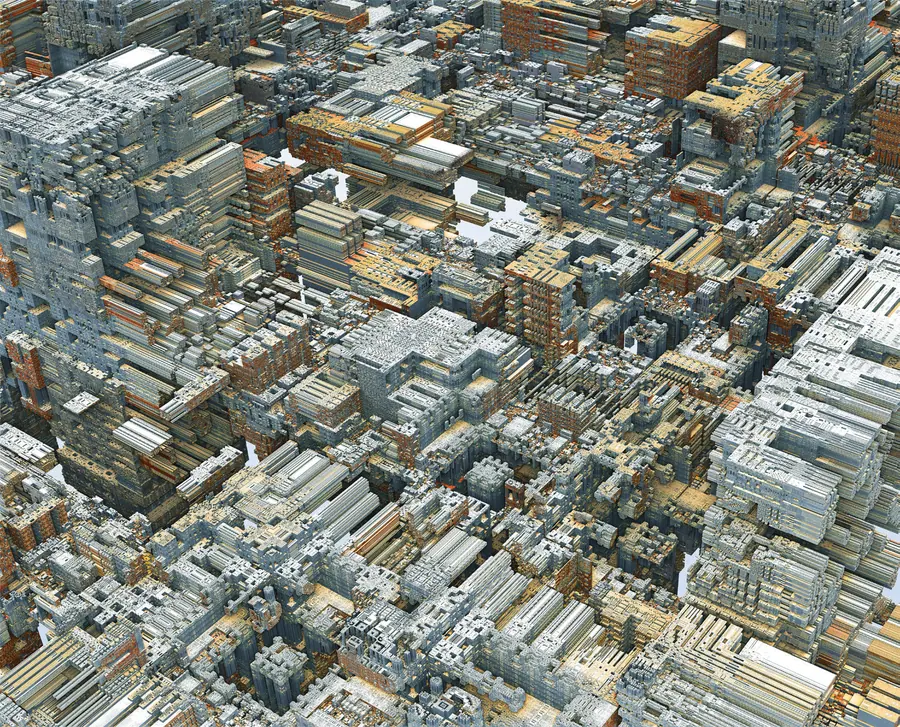
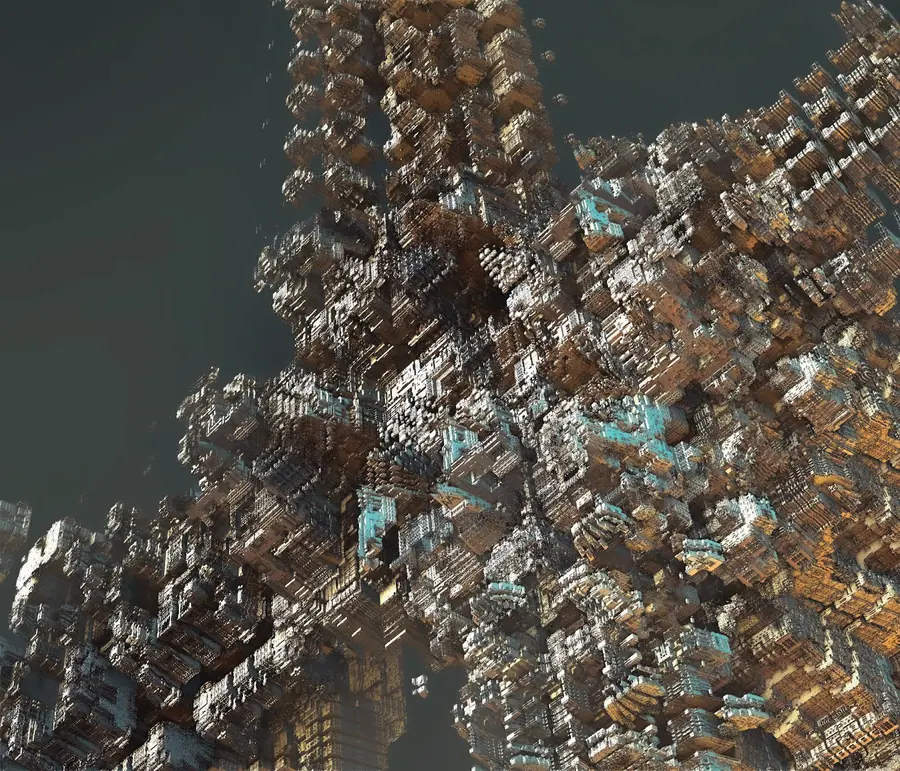
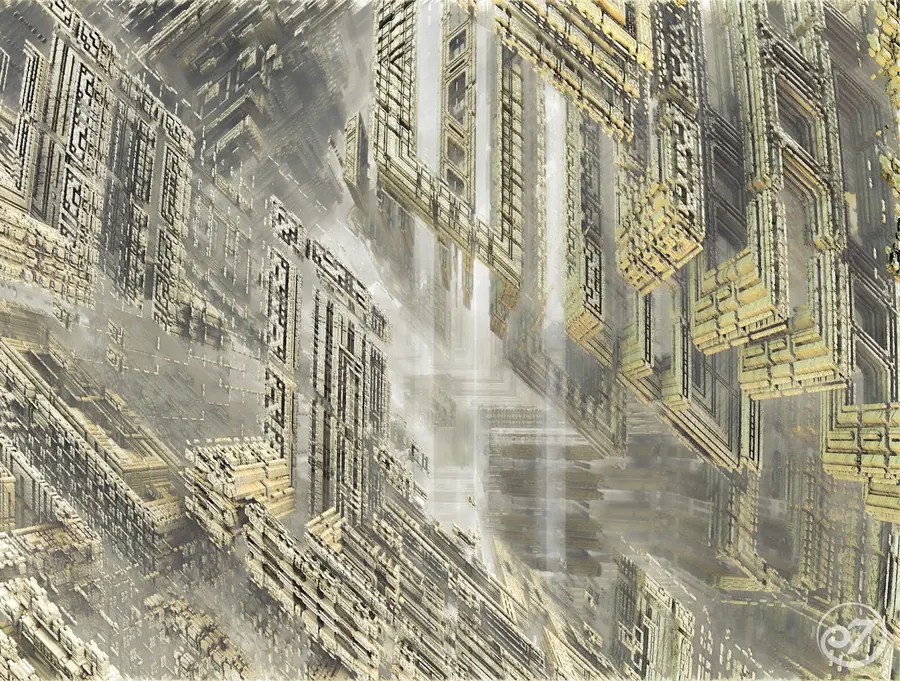
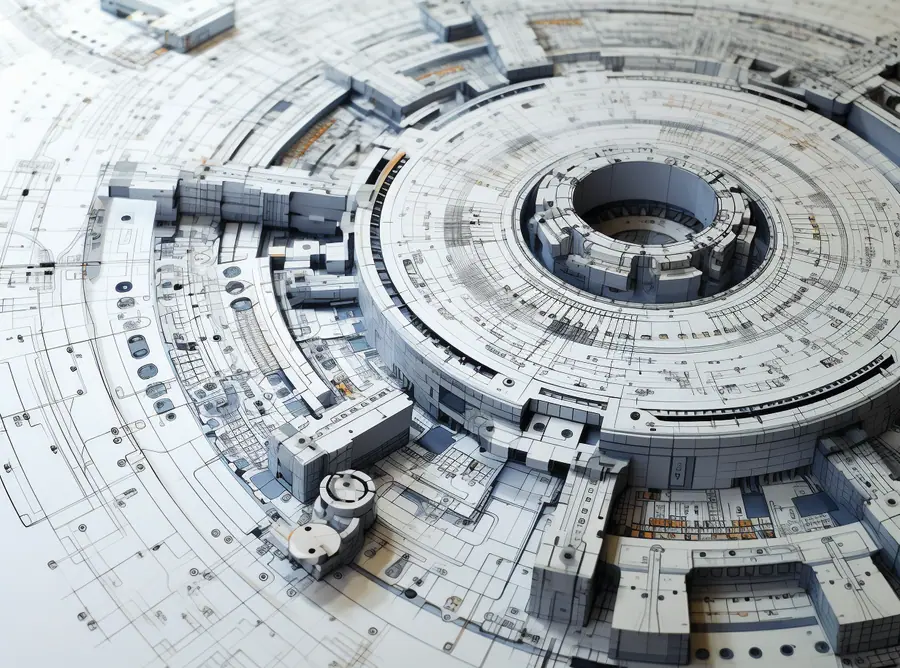
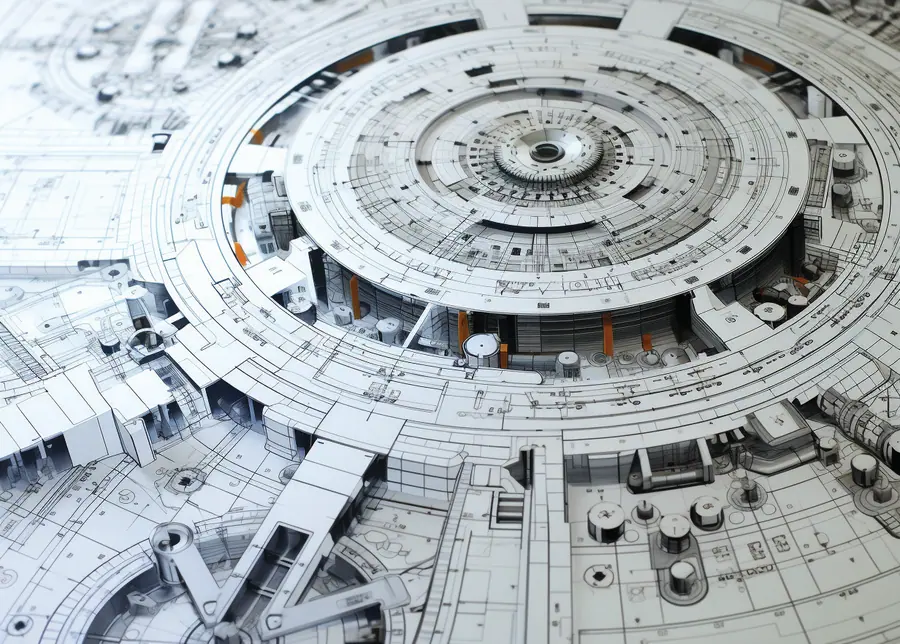
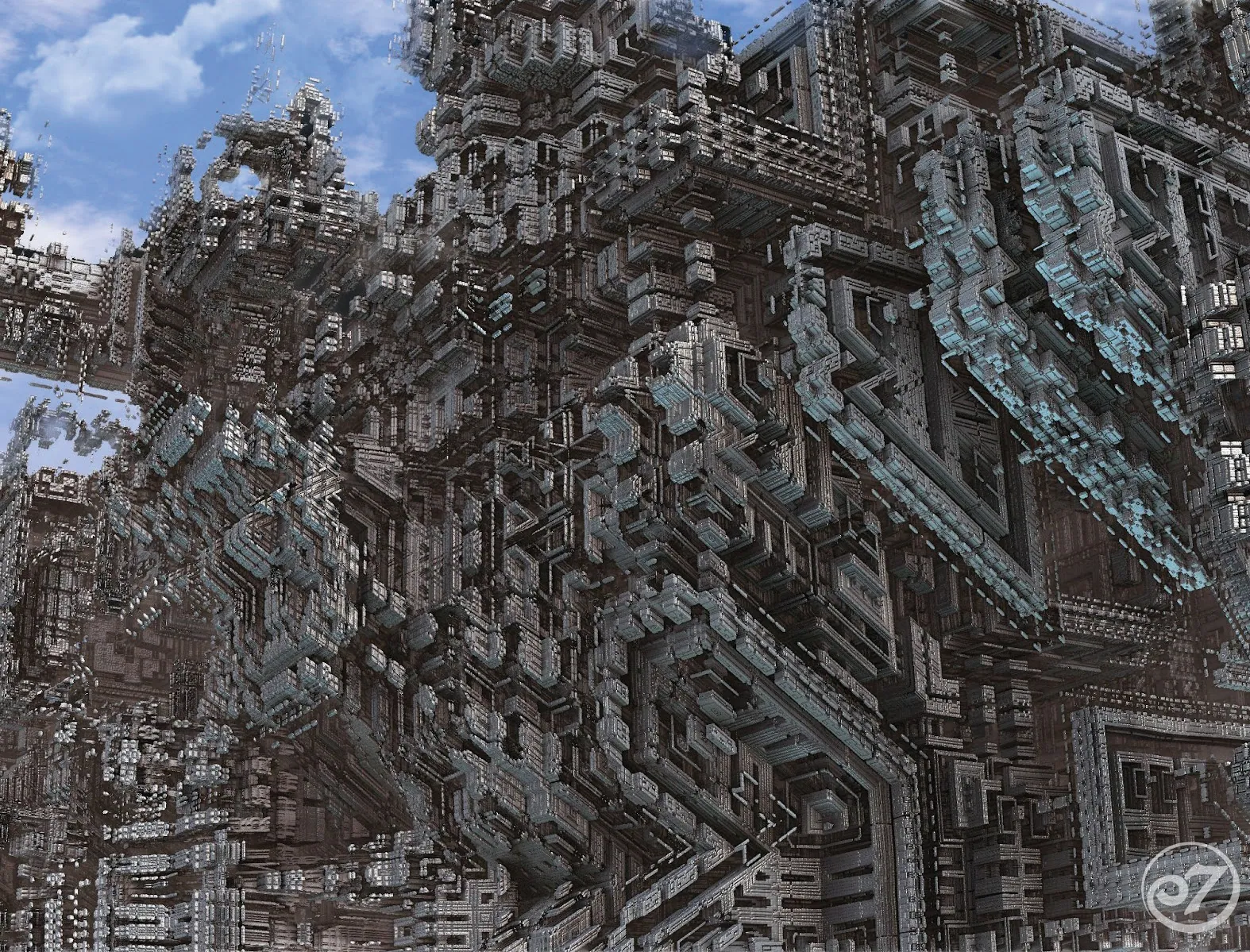
The megastructure studies test whether that formula can be written down. They are rendered in Mandelbulb 3D from a single recursive rule; nothing is modelled by hand. The book claims a limited result: a proof of concept "that a megastructure can be constructed by a mathematical formula."I, p. 63
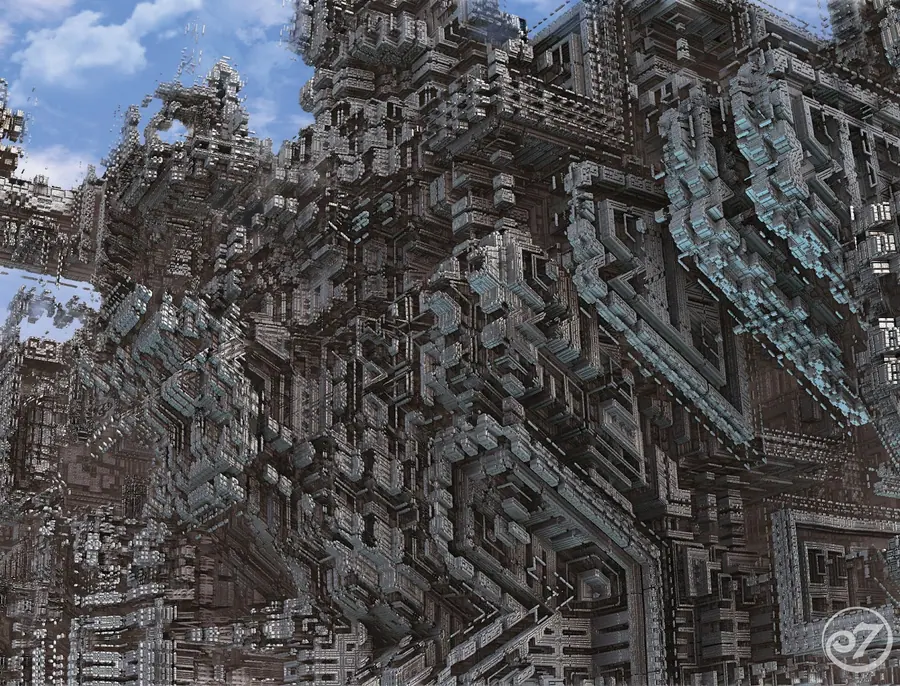
Fractal megastructure study 07
FIG. 04Fractal megastructure study 07One formula produces district, block, building and room as levels of the same subdivision. Speculative; rendered in Mandelbulb 3D. Chapter 5.Terrestrial Architecture, Vol. I, p. 68
Generator
Single recursive formula, Mandelbulb 3D
What recursion provides
Self-similar hierarchy: territory, district, block, building, room
What it is used for
Coordinating programme, circulation and ecological flow from one rule set
Status
Speculative proof of concept
Fractal megastructure study 01
FIG. 05Fractal megastructure study 01Speculative. Rendered from a single recursive formula in Mandelbulb 3D; Chapter 5, Fractals in Architecture.Terrestrial Architecture, Vol. I, p. 64
Fractal megastructure study 11
FIG. 06Fractal megastructure study 11Speculative. Rendered from a single recursive formula in Mandelbulb 3D; Chapter 5, Fractals in Architecture.Terrestrial Architecture, Vol. I, p. 71
Fractal megastructure study 12
FIG. 07Fractal megastructure study 12Speculative. Rendered from a single recursive formula in Mandelbulb 3D; Chapter 5, Fractals in Architecture.Terrestrial Architecture, Vol. I, p. 72
Fractal megastructure study 13
FIG. 08Fractal megastructure study 13Speculative. Rendered from a single recursive formula in Mandelbulb 3D; Chapter 5, Fractals in Architecture.Terrestrial Architecture, Vol. I, p. 73
Fractal megastructure study 05
FIG. 09Fractal megastructure study 05Speculative. Rendered from a single recursive formula in Mandelbulb 3D; Chapter 5, Fractals in Architecture.Terrestrial Architecture, Vol. I, p. 66
Fractal megastructure study 09
FIG. 10Fractal megastructure study 09Speculative. Rendered from a single recursive formula in Mandelbulb 3D; Chapter 5, Fractals in Architecture.Terrestrial Architecture, Vol. I, p. 69

Two properties make the method useful at terrestrial scale. A recursive structure "always retains a root rule system, even if the rule system is evolving",I, p. 69 so growth can be extended without losing coherence. And the same rule yields solid and void together: streets, courts and atria appear as the gaps the rule leaves, not as spaces cut afterwards.

Fractal construction is more a heuristic thought process than a technical procedure.

Terrestrial Architecture, Vol. I, p. 75
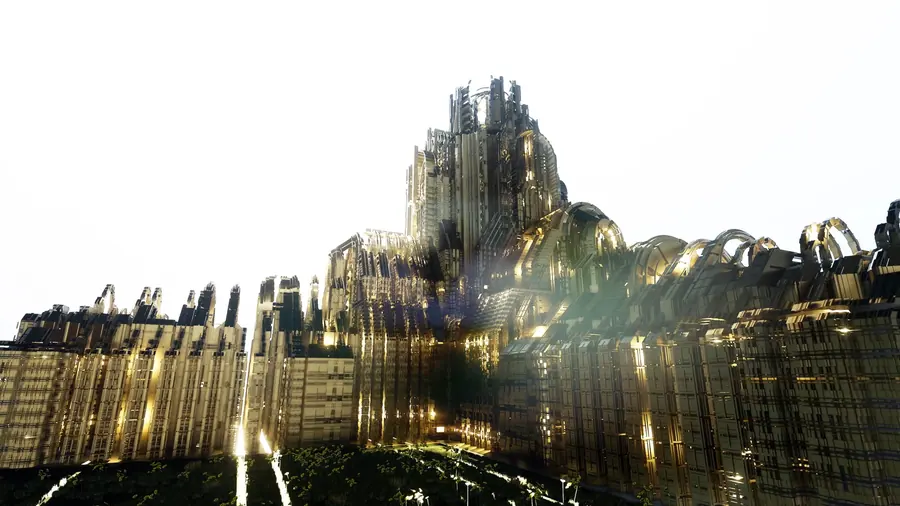
Exodus, megastructure in landscape
FIG. 11Exodus, megastructure in landscapeFrom the practice archive.Practice archive
Exodus, axial approach
FIG. 12Exodus, axial approachFrom the practice archive.Practice archive
Fractal megastructure study 13

District, block, room: one rule.

Fractal megastructure study 13
Mandelbulb 3D · Vol. I, p. 73

03 / Geometry

Harmonic grids and crystallography.

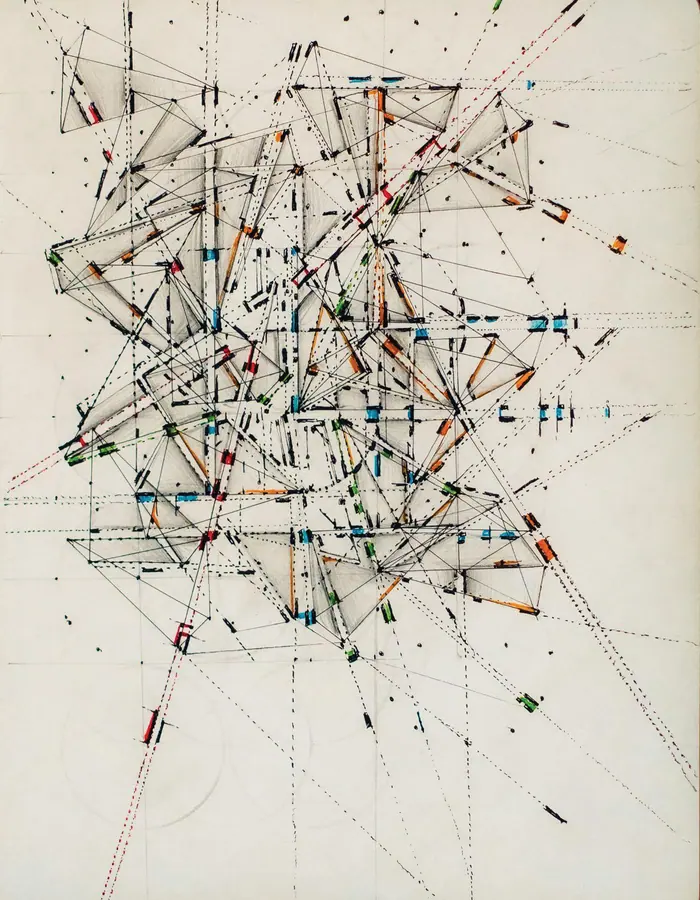
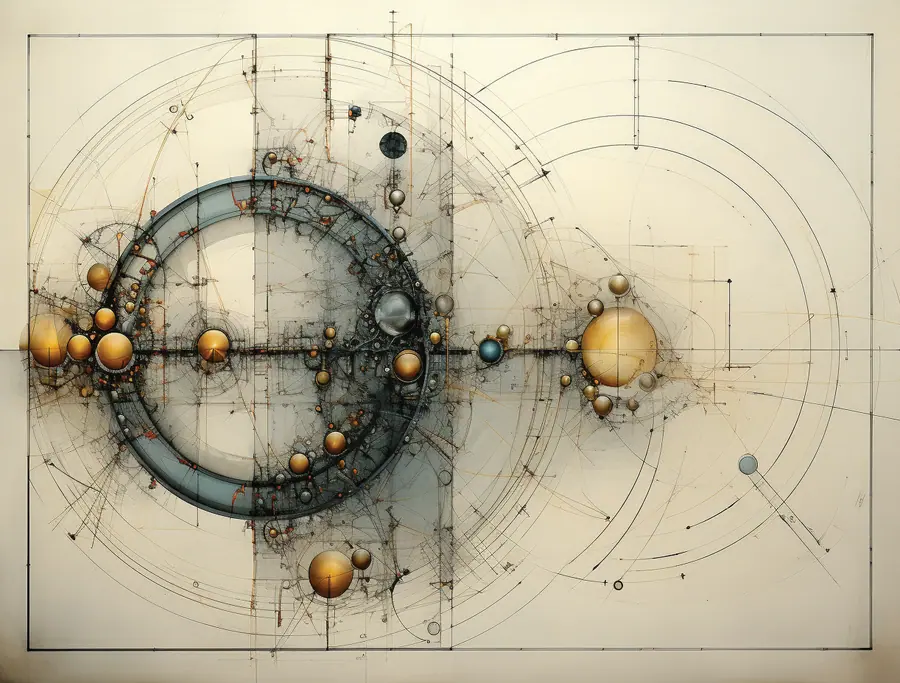
Part 3 of Volume I collects the drawings from which the larger systems come. They fall into three families: tetrahedral, orthogonal and radial grids, worked in two and three dimensions, and organic systems.I, p. 159–165 A harmonic grid is "formed by inscribing tetrahedral geometries in tangential circles that are arrayed in the x and y axis."I, p. 165

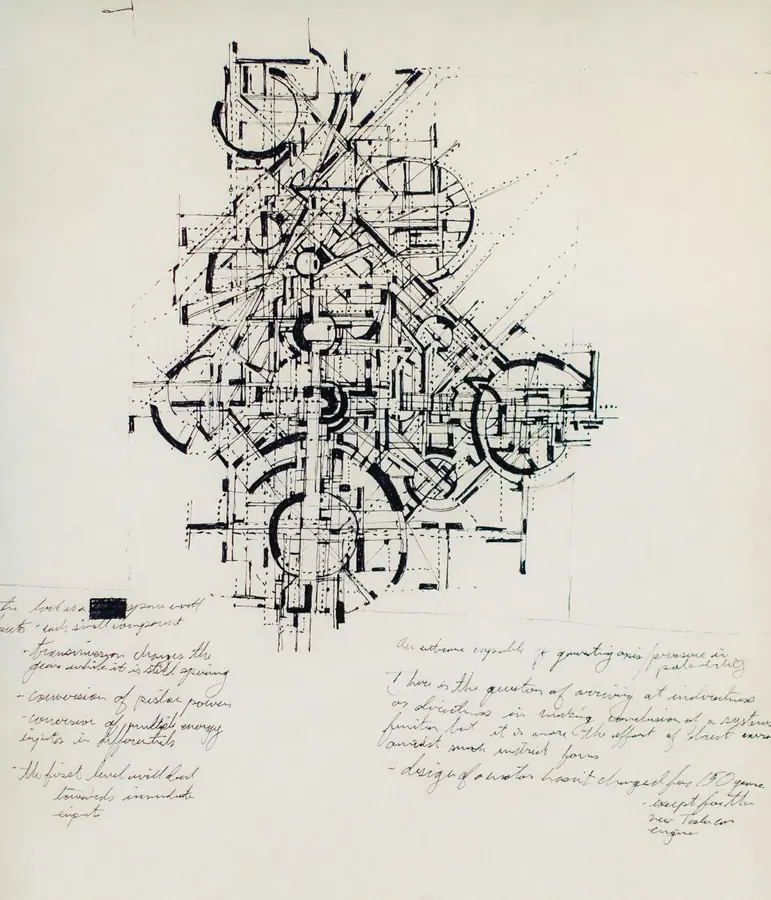
The hand drawings are working documents. A grid is laid down; chords are struck across it; where lines converge, structure is thickened. Several are explicitly musical, superimposing intervals the way a chord superimposes notes. Others study mechanisms, after Sigfried Giedion’s account of the lock: components that shift against each other to open and close space.
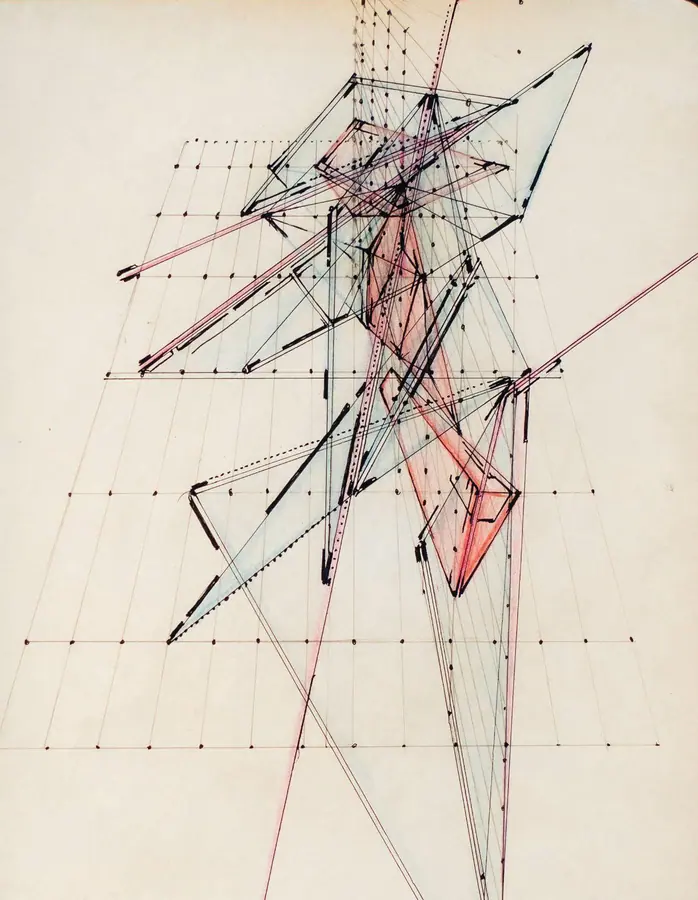
Tetrahedra along a surface grid
FIG. 13Tetrahedra along a surface gridFrom my sketchbook, a string of tetrahedra structures projected along a surface grid.Terrestrial Architecture, Vol. I, p. 173
Robotic building diagram
FIG. 14Robotic building diagramFrom my sketchbook an abstract diagram for a robotic building with shifting components like the gears of a clock or the components of a lock.Terrestrial Architecture, Vol. I, p. 175
Tetrahedral grid, chord structures
FIG. 15Tetrahedral grid, chord structuresTetrahedral grid with many converging axes, seeking to display the superimposition of chord structures in music.Terrestrial Architecture, Vol. I, p. 176

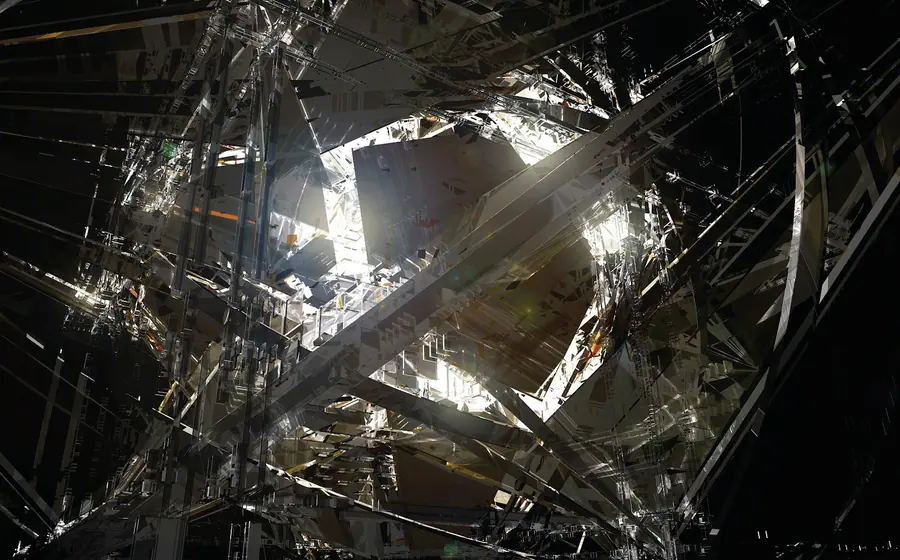
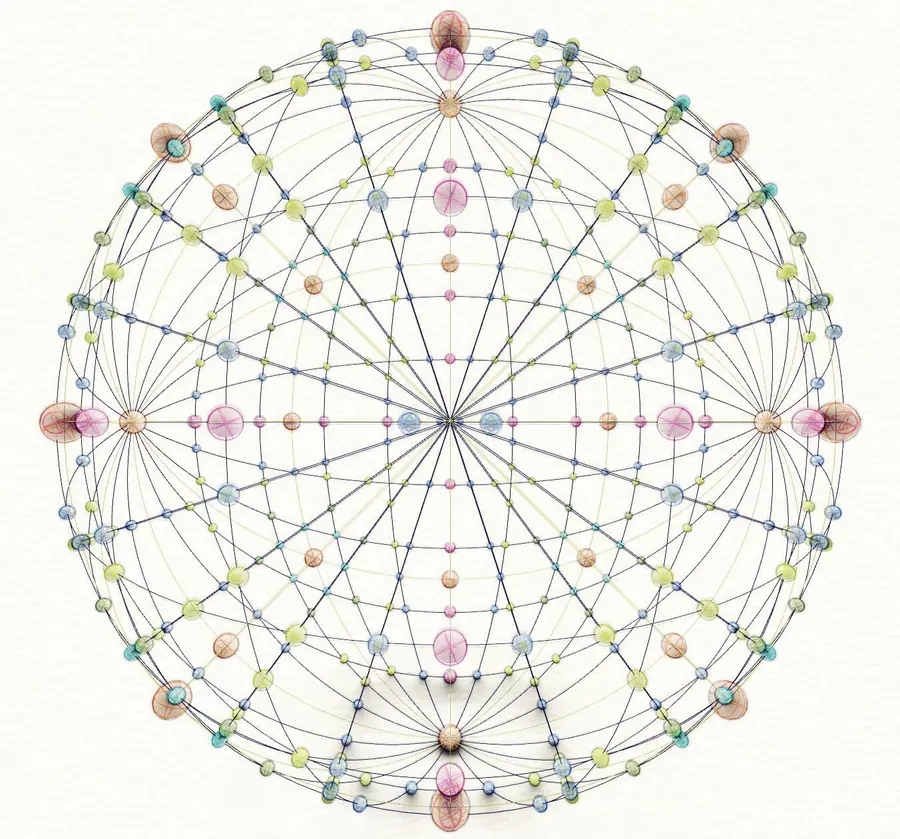
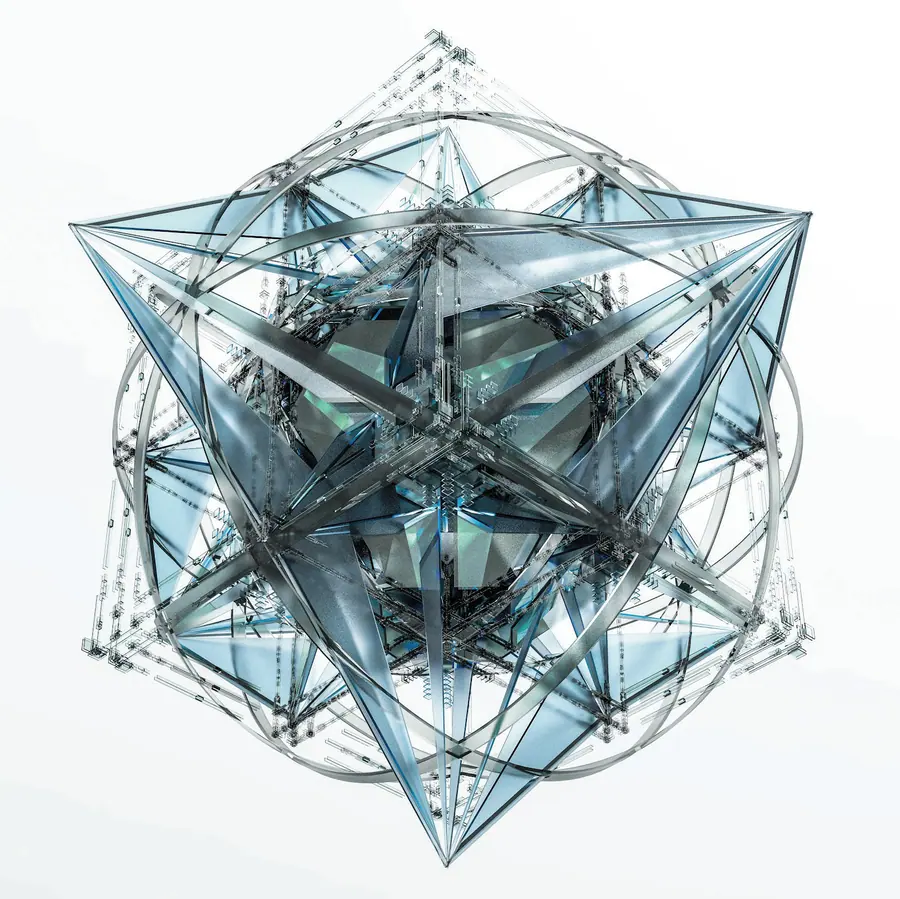
The crystallographic studies take the grid into three dimensions. Crystal systems supply axes of symmetry; structure is built along them and then photographed from inside, so that a lattice is read as a room.
Crystallographic grid
FIG. 16Crystallographic gridA crystallographic grid with axes of symmetry and a color coded coordinated systemTerrestrial Architecture, Vol. I, p. 180
Cubic crystallographic system
FIG. 17Cubic crystallographic systemAn exploration into the geometry of a cubic crystallographic systemTerrestrial Architecture, Vol. I, p. 179
Crystalline tectonic structure
FIG. 18Crystalline tectonic structureLooking up at a crystalline tectonic structure embedded within concentric ringsTerrestrial Architecture, Vol. I, p. 179
Box tectonics, matrices in space
FIG. 19Box tectonics, matrices in spaceDeconstructed box tectonics an exploded axonometric drawing forming matrices in spaceTerrestrial Architecture, Vol. I, p. 182

The degree to which we can derive a sophisticated geometric system is our ability to bring harmony to our complex realities.

Terrestrial Architecture, Vol. I, p. 182
04 / Settlement

Prototypical cartographies.

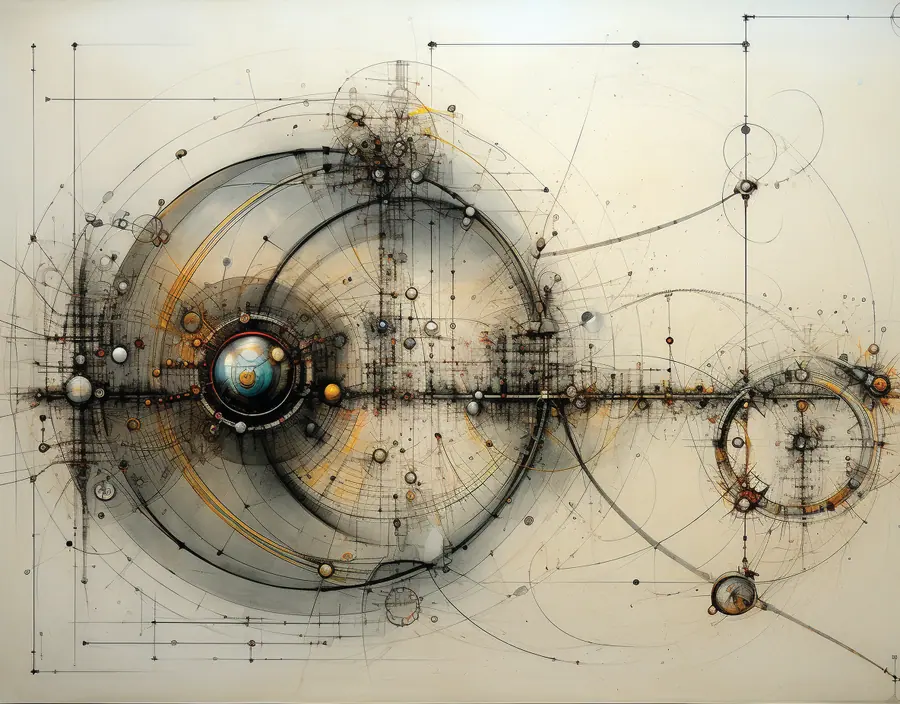
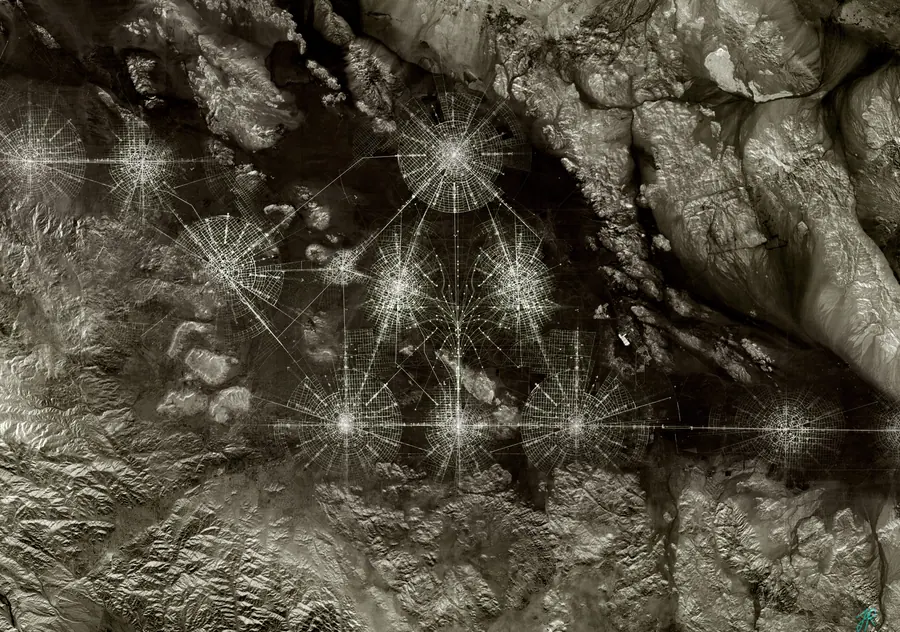
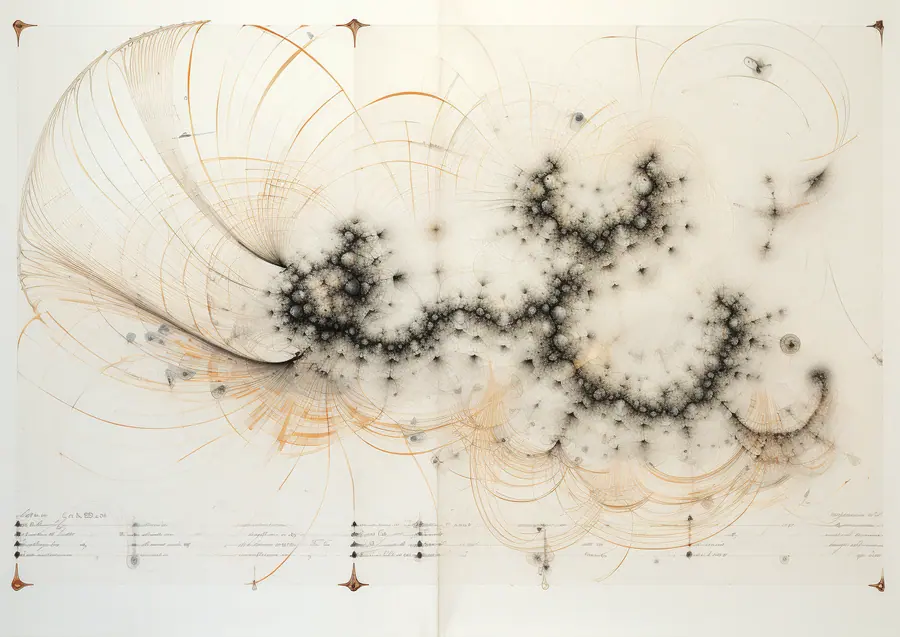
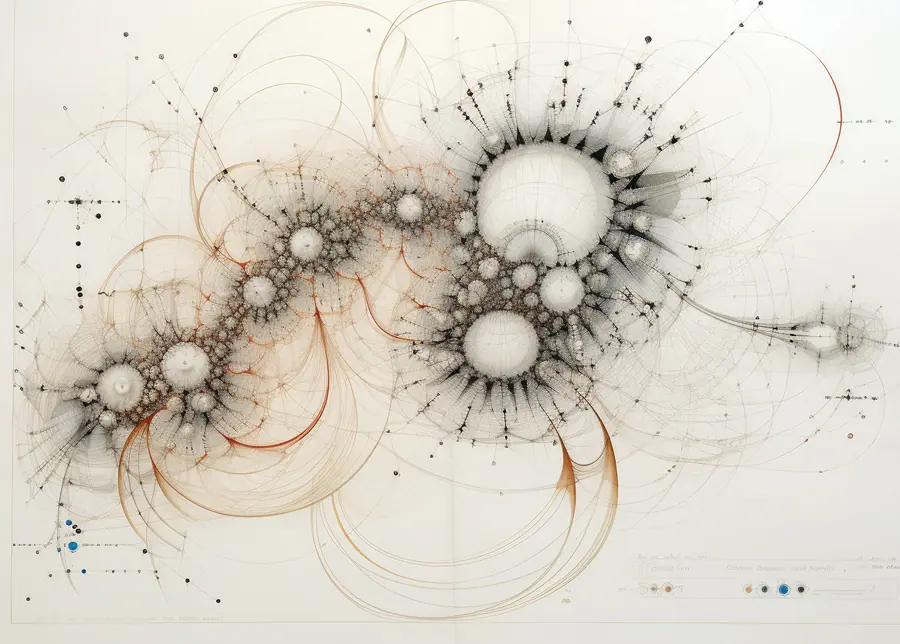
Chapter 14 turns the grids toward settlement. Cities are described as forming through repeated, rule-based acts of resource allocation; seen over enough time and area, those acts amount to a meta-morphology.I, p. 185–187 The chapter closes with a set of radial studies that test what a city organised around nested centres might look like from above.

These images are identified in the book as constructed with AI image generation (Midjourney), combining Landsat imagery with geometries from Mandelbulb. They are diagrams of a possibility, not designs for a site.
Radial grid study 01
FIG. 20Radial grid study 01An organic radial grid structure which begins to resemble the cellular diffusion of an organic city.Terrestrial Architecture, Vol. I, p. 190
Radial grid study 03
FIG. 21Radial grid study 03Radial grid structures fused with organic membrane tissues creating what seems to be an aerial view of a habitation of sorts.Terrestrial Architecture, Vol. I, p. 191
Radial grid study 07
FIG. 22Radial grid study 07Radial grid structure with many specific details contained within an overall structure.Terrestrial Architecture, Vol. I, p. 193
Radial grid study 08
FIG. 23Radial grid study 08The radial grids are concentric offset from each other and embedded within themselves as a recursive grid.Terrestrial Architecture, Vol. I, p. 193
Radial grid study 11
FIG. 24Radial grid study 11Seeking to tectonically describe a city with a radial motherboard aesthetic. Radial machine components reference motherboards and quantum computers.Terrestrial Architecture, Vol. I, p. 195
Radial grid study 12
FIG. 25Radial grid study 12Peripheral radial structures are part of the formulation as the geometric system is expansive.Terrestrial Architecture, Vol. I, p. 195
Radial settlements over terrain
FIG. 26Radial settlements over terrainRadial grid systems registered to a relief model. From the practice archive.Practice archive

The radial figure recurs because it resolves a problem of terrestrial scale: many centres, each with a legible periphery, connected by axes, with the land between left as landscape. The same figure appears at the scale of a component, a district and a region.

05 / The Codex

Crystalline megastructure and harmonic form.

Volume II restates the morphology argument in mathematical terms. Architecture is defined as a contraction operator: a mapping that draws the patterns of a larger field, the planet’s, into a stable built configuration.II, p. 137–139 The sequence is given as Void, Relation, Resonance, Form.

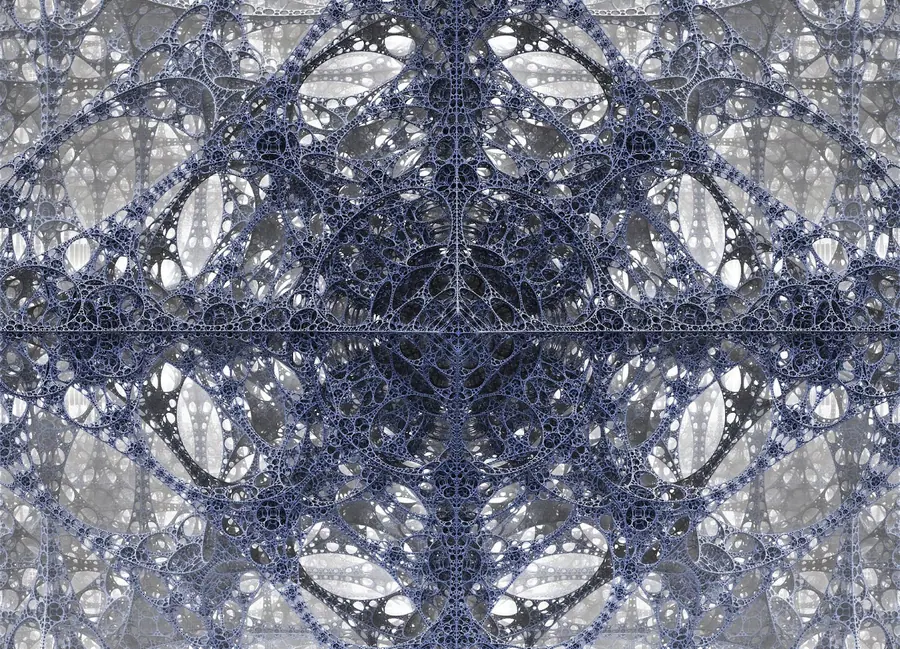
The chapter illustrates the idea with historical structures it reads as tuned to their sites, among them Giza, Stonehenge, Borobudur, Chartres and Teotihuacan, and with a set of speculative fractal megastructures.

Architecture is the continuation of cosmic law into cultural form.

Vol. II: The Codex, p. 137
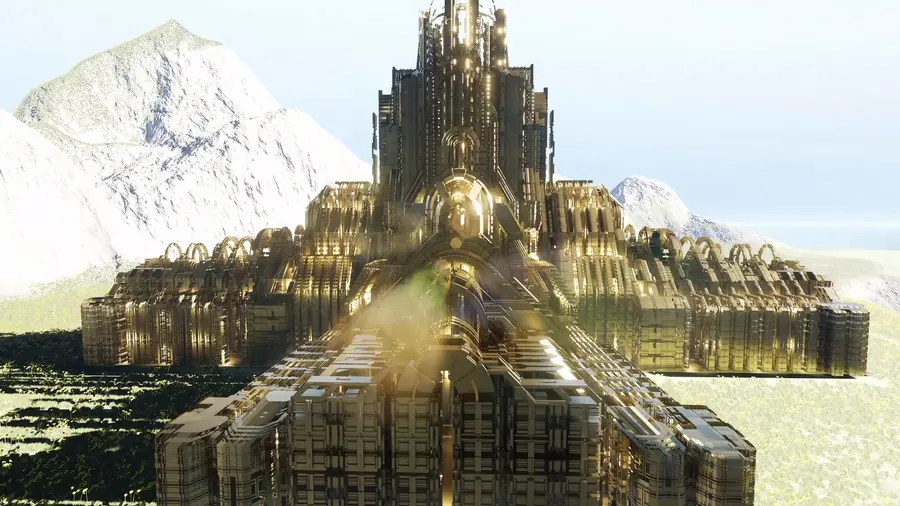
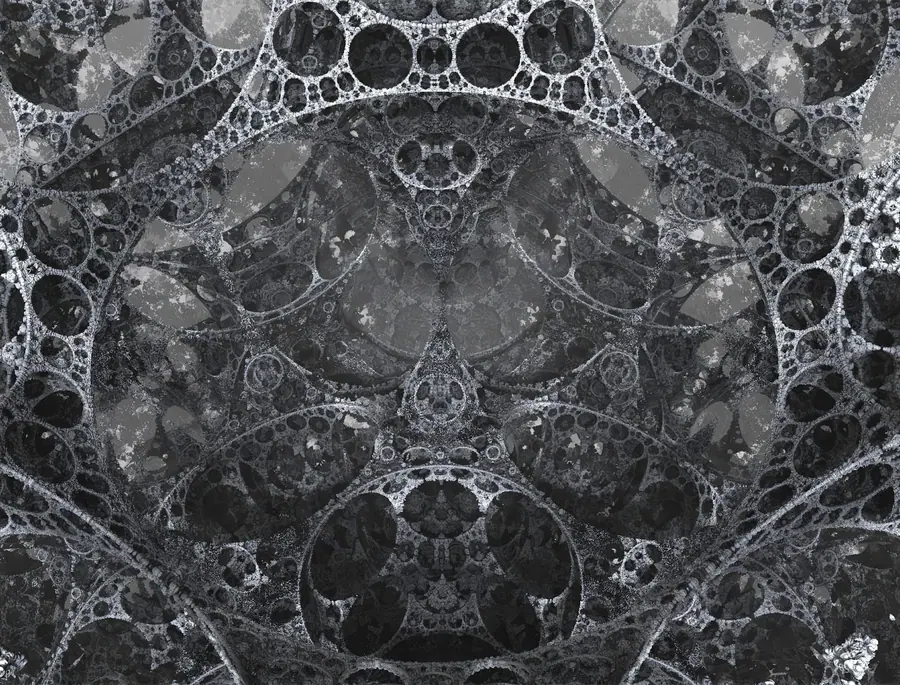
Symmetrical Fractal Cathedral
FIG. 27Symmetrical Fractal CathedralAn intricate geometry of arches and bridges, a recursive cathedral-like portal symbolizing the coherence between terrestrial form and higher dimensional resonance.Vol. II: The Codex, Fig. 33, p. 145
Nested Infinity of Crystalline Order
FIG. 28Nested Infinity of Crystalline OrderA world-scale architecture of repeating loops and filaments, illustrating how planetary megastructures mirror cosmic fractal scaling across dimensions.Vol. II: The Codex, Fig. 34, p. 146
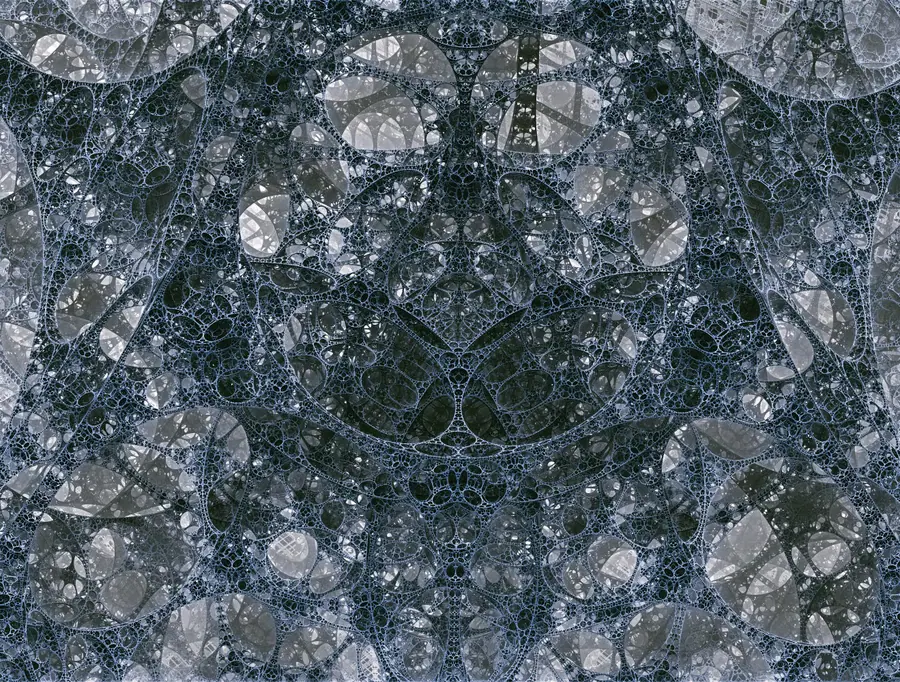
Fractal Lattice of Emergent Resonance
FIG. 29Fractal Lattice of Emergent ResonanceRecursive circular voids interlinked into a self-supporting web, evoking the structural grammar of ascension.Vol. II: The Codex, Fig. 35, p. 147

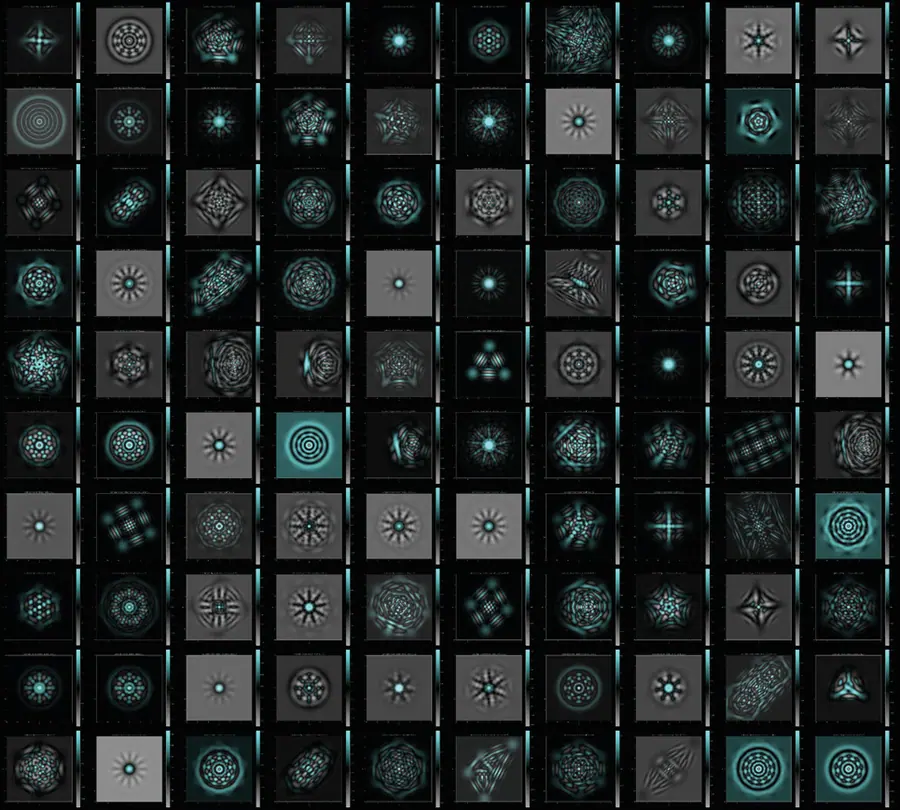
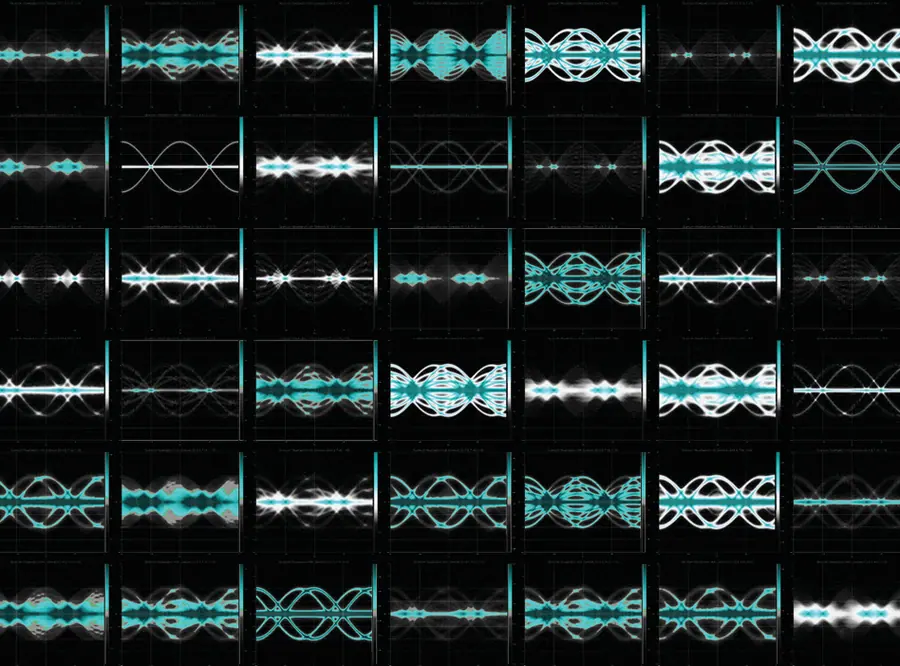
Chapter 10 contains the most direct design method in the book. Standing-wave patterns, arranged by symmetry and order in what the book calls the Quantum Atlas, are treated as a library of plans; band patterns are treated as routes. "Together they complete a kit: rooms from rosettes, routes from bands."II, p. 122
The Quantum Atlas (V2)
FIG. 30The Quantum Atlas (V2)Matrix of standing‑wave planforms arranged by symmetry class and radial order. Bright filaments trace antinodes; dark seams trace nodal corridors. The plate functions as a parametric library for translating resonance into tectonics.Vol. II: The Codex, Fig. 29, p. 119
Matrix Quantum Wave Band Plate
FIG. 31Matrix Quantum Wave Band PlateEach panel shows a bounded 1D superposition rendered as luminous antinodal ridges and nodal lanes. Coupling, beating, and damping generate the braid- like variations across the grid; these map directly to ribs, joints, and envelope modulations in linear architecture.Vol. II: The Codex, Fig. 30, p. 120

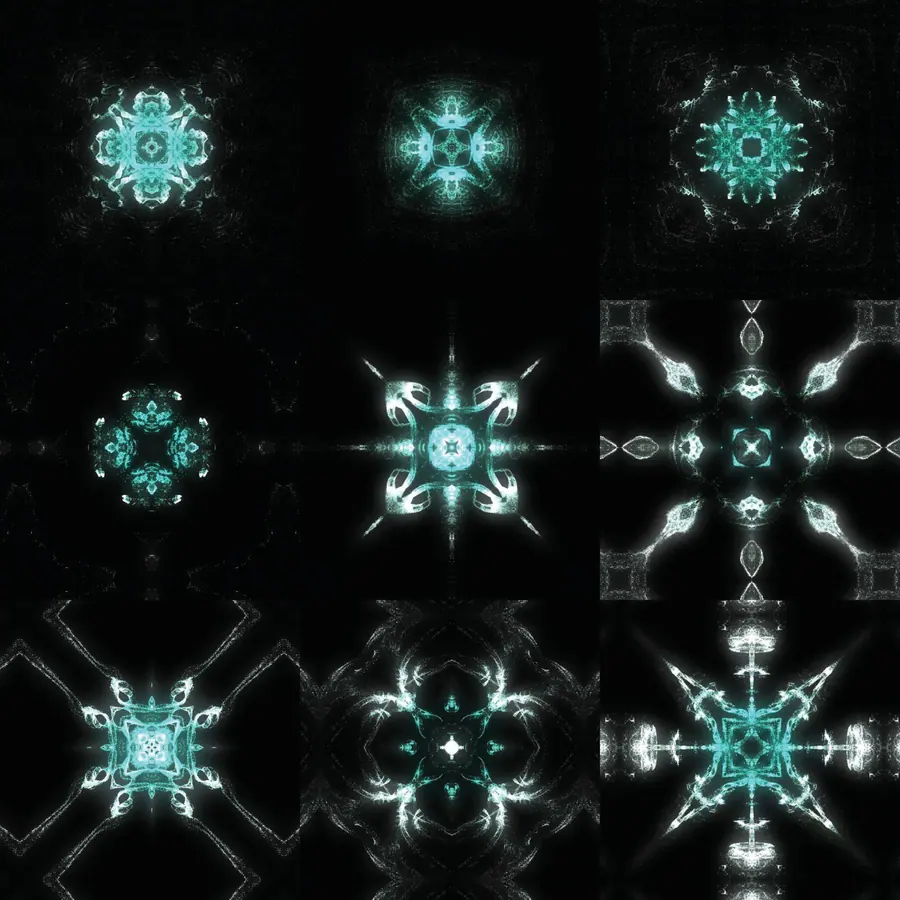
Chapter 12 documents a simulation written for the book, in which a swarm of particles constrained to a sphere is coupled to a wave field and projected stereographically. The symmetric figures it produces are not drawn; they are "the trace those relations leave on perception."II, p. 134
Stereographic Murmurations
FIG. 32Stereographic MurmurationsA sequence of emergent symmetry states arising from the coupled swarm–wave dynamics defined in Universe.py. Each panel represents a momentary phase portrait of a measure-preserving flow on the sphere S2S^2S2, rendered via stereographic projection. Luminous nodal cores and radiating filaments correspond not to material concentrations but to regions of amplified probability density and phase alignment, intensified by the conformal distortion of the projection near the pole. The repeated dihedral and radial symmetries are the visible trace of interacting operators, local mean-field swarm alignment, quantum-inspired probability flow, and spherical constraint, driven near criticality. The image should be read as ornament generated by motion: a cartography of relations rather than objects.Vol. II: The Codex, Fig. 32, p. 135

Beauty emerges not from ornament, but from coherence.

Vol. II: The Codex, p. 198